

The Green Lungs of New Orleans: Why Audubon Park Is Much More Than Just a Park
Discover why Audubon Park is one of New Orleans’ most beloved landmarks, what attractions you can find within the park, and why it remains one of the top destinations for relaxation and outdoor recreation in Louisiana.
New Orleans is one of the most unusual cities in the United States. It cannot be confused with New York, Chicago, or even other cities of the American South. Here, French, Spanish, African, and Caribbean cultural traditions have blended together, while its music, cuisine, and architecture have created a unique atmosphere that attracts millions of tourists from around the world every year. Most travelers come here for the famous French Quarter, the jazz clubs on Bourbon Street, colorful festivals, and the renowned Creole cuisine. However, New Orleans can surprise visitors with much more than historic streets and a lively nightlife. The city also offers places that reveal a completely different side of it — calmer, greener, and more relaxed.
One such place is Audubon Park — one of the most beautiful and beloved parks in New Orleans. It is a true natural oasis within the urban landscape, where centuries-old oak trees stand alongside picturesque lagoons, and the sounds of city traffic are replaced by birdsong and rustling leaves. Many tourists come here for just a couple of hours, but often end up staying much longer as they discover the atmosphere of a true Southern city away from the main tourist routes. Audubon Park has long been more than just a green space for walking. For local residents, it is an essential part of everyday life. People come here to exercise, enjoy family picnics, walk their dogs, meet friends, and spend weekends outdoors. For visitors, the park offers a chance to see New Orleans the way locals know and love it.
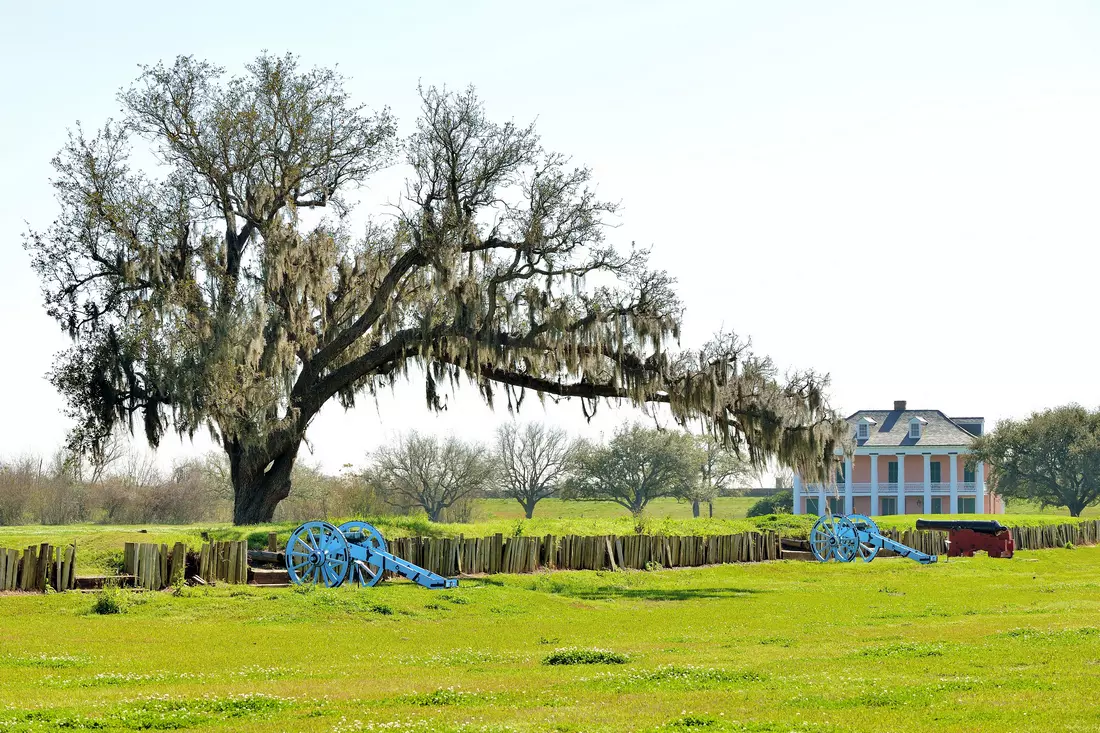
The park’s special charm comes from its giant Southern live oaks, some of which have been growing here for several centuries. Their sprawling branches form natural green tunnels, while the hanging Spanish moss creates an atmosphere unique to Louisiana and the American South. As you walk through the park, it is hard to believe that just a few minutes away lies one of the country’s busiest tourist centers. The local wildlife is equally impressive. Visitors can encounter dozens of bird species, turtles, squirrels, and other animals within the park. Thanks to its many water features and rich vegetation, Audubon Park has become an important part of the city’s ecosystem and a favorite destination for nature lovers and birdwatchers.
In addition, the park is part of the famous Audubon Nature Institute complex, which also includes one of the best zoos in the United States, an aquarium, and other natural attractions in New Orleans. Thanks to this, a visit to Audubon Park can easily turn into a full day of family recreation. Today, Audubon Park is rightfully considered one of New Orleans’ main natural landmarks. People come here to watch the sunrise, go for runs along shaded paths, enjoy waterside picnics, or simply embrace the unhurried rhythm of Southern life. And it is here that many travelers first realize that New Orleans is not only about jazz, festivals, and historic districts, but also about stunning natural beauty that is an essential part of the city’s identity.

Many visitors don’t realize that the majestic Southern live oaks of Audubon Park are older than the park itself. Some are more than 250 years old and were already standing here before the United States became an independent nation.
In the Heart of Green New Orleans: Where Audubon Park Is Located and Why Its Location Is Perfect for Visitors
One of the reasons for the popularity of Audubon Park is not only its beauty but also its exceptionally convenient location. The park is situated in the Uptown New Orleans district — one of the city’s most prestigious, peaceful, and picturesque areas. Unlike the noisy city center with its endless flow of tourists, bars, and music venues, this neighborhood offers a completely different atmosphere. Wide streets, historic mansions, university campuses, and shaded avenues create the feeling that you have arrived in an entirely different city.
Audubon Park covers more than 140 hectares along one of North America’s most iconic natural landmarks — the Mississippi River. The vast green area lies on a broad curve of the river, locally known as the Crescent. It is this distinctive bend that gave New Orleans its famous nickname — the Crescent City. This location played an important role in the park’s history. Long before the park was established, these lands were valued for their fertile soil and proximity to the river. In the 19th century, plantations were located here, and later the area became the site of the 1884 World Cotton Centennial Exposition. Over time, the former exhibition grounds were transformed into one of the most beautiful urban parks in the United States.
- 01. Uptown — another side of New Orleans
Most travelers first experience New Orleans through the French Quarter. However, Uptown reveals a quieter, more elegant side of the city. This district is known for:
- Historic 19th-century mansions;
- Green streets lined with centuries-old oak trees;
- Prestigious educational institutions;
- Cozy cafes and restaurants;
- A calm, residential atmosphere.
Tourist crowds are rare here. Instead, visitors can observe everyday local life — people walking with children, exercising, or relaxing on the porches of historic homes. For this reason, many travelers see Audubon Park as an excellent opportunity to step beyond the standard tourist route and experience the real New Orleans.
- 02. Proximity to the Mississippi River
Another defining feature of the park is its closeness to the legendary Mississippi River. This is not just the most famous river in the United States, but a historic artery that played a crucial role in the development of trade, shipping, and the economy of North America. Although much of the park is hidden behind greenery and levees, visitors can easily reach the riverfront and enjoy impressive views. Watching the river traffic is especially fascinating. Even today, the Mississippi carries cargo ships, oil tankers, tugboats, barges, and tour vessels. For many visitors, the scale of the river is a real surprise — in some places, the opposite bank appears surprisingly distant. - 03. Tulane University — the academic heart of the area
Right next to the park lies the campus of Tulane University — one of the most prestigious private universities in the United States. Founded in the 19th century, it has long been an important part of New Orleans’ intellectual and cultural life. Even those not connected to academia will appreciate the university grounds. The campus is known for its beautiful architecture, landscaped gardens, and classic American university atmosphere. Walking here often feels like stepping into a film set, so cinematic is the setting.
Nearby is another well-known institution — Loyola University. Its campus is adjacent to Tulane, creating a unique academic environment. The presence of two major universities makes this part of the city especially vibrant, with students, professors, and researchers from around the world. As a result, the area around Audubon Park is considered one of the most educated and culturally rich in New Orleans. - 04. Garden District — a neighborhood of grand mansions
Just a short drive from the park lies the famous Garden District. This historic neighborhood is considered one of the most beautiful not only in Louisiana but in the entire United States. Visitors are greeted by stunning 19th-century mansions, lush gardens, old oak-lined avenues, handcrafted iron fences, and historic churches. Many travelers come here specifically for its architecture and Old South atmosphere. After a walk through Audubon Park, a visit to the Garden District feels like a natural continuation of exploring this part of the city. - 05. The legendary St. Charles Avenue streetcar
Another advantage of the park’s location is its proximity to the famous St. Charles Avenue streetcar line. This is not just public transportation — it is the oldest continuously operating streetcar system in the world. Its vintage green cars are as iconic to New Orleans as jazz or the French Quarter itself. Riding the streetcar offers a completely different perspective on the city. The route passes through historic neighborhoods, university districts, and elegant boulevards lined with impressive architecture. Many visitors choose the streetcar over taxis specifically for the experience.
Few urban parks can boast such a unique combination of natural, historical, and cultural attractions nearby. Within a single district, visitors can relax in nature, see the Mississippi River, visit one of the best zoos in the country, explore university life in New Orleans, admire historic mansions, ride a legendary streetcar, and taste the famous cuisine of Louisiana.
That is why Audubon Park is often not just a single stop on a travel itinerary, but the centerpiece of an entire day exploring New Orleans. Its location allows visitors to seamlessly combine nature, history, architecture, and culture into one rich and memorable experience.
From Plantation to Urban Icon: The Fascinating Untold History of Audubon Park
Today, Audubon Park is associated with green avenues, centuries-old oak trees, calm lagoons, and family recreation. Every day, thousands of people come here to run, walk, or have a picnic, rarely thinking about the long history this land has gone through over the past centuries. Meanwhile, the story of the park is closely intertwined with the history of New Orleans itself — a city that has experienced the colonial era, plantation slavery, the Civil War, economic crises, and large-scale transformation.
Modern Audubon Park is not just a beautiful urban park. It is a place where different chapters of American history are reflected: from the wealth of the plantation era to the idea of creating a public space open to all residents of the city.
- 01. When there were fields instead of avenues
Long before the park existed, this area looked completely different. In the early 19th century, the lands along the Mississippi River bend were part of a large agricultural estate. This was the Foucher Plantation, owned by one of Louisiana’s influential families. At that time, New Orleans was a major trade center of the American South. The Mississippi River provided efficient transportation for goods, while fertile soil ensured high agricultural yields. Plantations like this grew sugar cane, indigo, cotton, and other crops. Today, it is difficult to imagine that where walking paths and scenic lagoons now stand, there were once fields and farm buildings. - 02. The dark side of the plantation era
Like many large estates in Louisiana at the time, the plantation relied on the labor of enslaved people. This is an essential part of history that cannot be ignored. The economic prosperity of the southern states in the 19th century was largely built on the system of slavery. Thousands of people were deprived of freedom and forced to work under extremely harsh conditions. Modern historians increasingly emphasize this aspect of the past, noting that many well-known public spaces in the United States have complex origins. Audubon Park is one example of how a territory once tied to inequality and exploitation was later transformed into a space open to everyone, regardless of background or social status. - 03. After the Civil War: a time of change
Real transformation began after the end of the Civil War in 1865. The defeat of the Confederacy led to the abolition of slavery and major economic changes across the South. Many plantations faced financial decline, as the previous system of agriculture could no longer function in its former form. Gradually, the land began to change its purpose. New Orleans was growing, the population was increasing, and the city needed new public spaces. However, the fate of this land was ultimately shaped by an event that, at first glance, had little to do with the future park. - 04. The World’s Fair that changed everything
In 1884, New Orleans hosted one of the largest international events of its time — the World’s Industrial and Cotton Centennial Exposition. In the 19th century, world expositions were gateways to the future, showcasing technological progress, industrial achievements, architectural innovation, and cultural developments from around the world. A vast area was required for the exhibition, and the former Foucher Plantation lands were chosen. In a short time, exhibition halls, landscaped gardens, walking paths, engineering structures, transportation infrastructure, and decorative water features were built. For several months, this part of New Orleans became an international hub of trade and innovation, attracting hundreds of thousands of visitors.
After the exposition ended, the city faced an important question: what should be done with this large, developed area? Demolishing everything seemed wasteful, especially since residents had already grown to appreciate the new green space. This is how the idea of transforming the former exhibition grounds into a public park emerged. In many ways, the 1884 World’s Fair became the starting point for what would later become Audubon Park. - 05. The birth of an urban park
By the late 19th century, the United States saw a growing movement to create public parks in major cities. Urban planners aimed to provide residents with access to nature without leaving the city. Successful examples already existed:
- Central Park in New York;
- Fairmount Park in Philadelphia.
New Orleans also decided to create its own large public green space. Over time, the former exposition grounds were gradually transformed into a park. New avenues, walking routes, landscaped areas, recreational spaces, and ornamental ponds appeared. The park soon became a favorite place for city residents — not only for wealthy families living nearby, but for people from all parts of New Orleans.
- 06. Why it was named Audubon Park
Many visitors are surprised to learn that John James Audubon never lived on the site of the future park and was not involved in its creation. So why does the park bear his name? The answer lies in his enormous influence on American science and culture.
- Who John James Audubon was
John James Audubon was a renowned naturalist, artist, and explorer. Born in 1785, he devoted much of his life to studying North American birds. At a time when photography did not exist, he traveled across the continent, observing birds and creating highly detailed illustrations. His most famous work, The Birds of America, is considered one of the most important scientific and artistic publications in U.S. history. Audubon’s work had a major impact on ornithology and the popularization of natural science. - Audubon’s connection to Louisiana
Although he did not live on the site of the modern park, he visited Louisiana multiple times. During his travels, Audubon studied local wildlife, observed birds in the Mississippi Delta, and created numerous sketches. The region’s rich ecosystem became an important part of his research. When city officials were choosing a name for the new park in the late 19th century, Audubon’s name was a natural choice. It symbolized a connection to nature, scientific discovery, and the preservation of the natural environment. This is how Audubon Park received its name. Later, the same name was used for other nature-related sites in the city, including Audubon Zoo and a wider network of environmental institutions.
Over more than a century, Audubon Park has changed many times. It has survived hurricanes, economic crises, urban expansion, major renovations, and environmental projects. Yet its essential role has remained the same. As it was a hundred years ago, the park continues to be a place where residents of New Orleans can escape the city’s noise and reconnect with nature.
This is what makes Audubon Park truly unique. Its history reflects the history of the American South itself — complex, contradictory, and layered. From plantation lands and the era of inequality to one of Louisiana’s most beloved public spaces, the journey of this area is as fascinating as the story of New Orleans itself.
Where Nature Meets Engineering: The Overlooked Secrets of Audubon Park
At first glance, Audubon Park may seem like just a beautiful urban park with well-kept pathways, lakes, and shaded avenues. However, behind its scenic landscapes lies much more. Every tree here has its own story, every lagoon is part of a complex engineering system, and the familiar Spanish moss reflects the fragile balance of the local ecosystem.
It is these details that turn an ordinary walk through the park into a true journey through the history, nature, and engineering heritage of New Orleans.
- 01. The architecture of oaks: how trees shape the identity of the park
The main symbol of Audubon Park is its majestic live oaks. For residents of Louisiana, they are not just trees, but part of the region’s cultural heritage. Some of the oaks growing in the park existed long before the park itself was created. According to experts, certain specimens are over 250–300 years old. This means they were already here before the United States gained independence. Unlike many other oak species, Southern live oaks grow outward rather than upward. Their branches can extend dozens of meters from the trunk, forming vast natural canopies. While walking through Audubon Park, you may notice an interesting detail: many pathways seem to follow the natural direction of the trees’ growth. This is not a coincidence.
When the park was designed in the late 19th century, landscape architects made an unusual decision: instead of forcing nature into a rigid urban grid, they built infrastructure around existing trees. Thanks to this approach, the oldest oaks have survived to this day. Some branches are so heavy that they require special support structures. From a distance, they resemble architectural elements. At times, it feels less like a grove of trees and more like a vast natural cathedral, with columns, arches, and vaults created by nature itself. The oaks are especially impressive at sunrise and sunset, when golden light filters through the dense canopy and creates shifting patterns of light and shadow. - 02. Why these oaks are so important
These ancient trees serve several essential functions:
- They provide natural shade in Louisiana’s hot climate;
- They help reduce air temperature;
- They prevent soil erosion;
- They provide habitat for birds and insects;
- They preserve the historic character of the park.
In many ways, it is the oaks that make Audubon Park instantly recognizable in photographs.
- 03. Lagoons instead of swamps: an engineering marvel in New Orleans
When visitors first arrive in New Orleans, they are often surprised by one fact: much of the city lies below sea level. This creates serious challenges for urban infrastructure. One might expect a large park with numerous bodies of water in such a region to regularly turn into a swamp after heavy rains. However, this rarely happens. The secret lies in a well-designed drainage system. The modern lagoons of Audubon Park are not merely decorative. They are part of a sophisticated hydraulic system that helps regulate water levels across the park. After heavy rainfall, water is collected in designated low-lying areas and reservoirs, then gradually directed through canals and pumping systems into the city’s drainage network. For New Orleans, such systems are essential. The city frequently experiences tropical downpours, hurricanes, seasonal flooding, and high groundwater levels. As a result, even a simple park pond often plays a role in the broader infrastructure system. Visitors see peaceful reflective waters surrounded by oaks and sky, rarely realizing these lagoons also help protect the land from flooding. - 04. Why the park does not turn into a swamp
This is made possible by several factors: an artificially shaped landscape, a system of canals, pumping stations, continuous water level monitoring, and regular maintenance of the water bodies. In essence, Audubon Park represents a successful integration of nature and modern engineering.
- The battle for Spanish moss: a Southern symbol under threat
If you ask someone to imagine a typical Southern landscape in the United States, they will likely picture ancient oaks draped in long silver strands. This is the famous Spanish moss. Despite its name, it is not actually moss. It is a flowering plant that uses trees only for support and does not harm them. Spanish moss has become one of the defining visual symbols of Louisiana, giving Audubon Park its cinematic atmosphere. However, its story is more complex than it seems. - Why Spanish moss disappears and returns
In the mid-20th century, the amount of Spanish moss in the southern United States declined significantly due to air pollution, urban development, removal of old trees, and changes in microclimate. Since the plant absorbs moisture and nutrients directly from the air, it is highly sensitive to environmental conditions. As ecological conditions improved, Spanish moss gradually returned to many areas, including Audubon Park. Today, its presence is increasing again, although environmental monitoring continues. - Who lives inside Spanish moss
There are many myths surrounding this plant. One of the most common is that it is filled with dangerous insects and ticks. In reality, the situation is more nuanced. Inside dense clumps, one can indeed find spiders, beetles, ants, various insects, and even small lizards. However, the risk to visitors is often exaggerated. Unless the plant is handled or used improperly, it poses no real danger. For birds, Spanish moss is actually an important nesting material, widely used in bird habitats.
- 05. The golf course and wildlife: balancing humans and the ecosystem
One of the most debated features of Audubon Park is its golf course. For some visitors, it is an important part of the park’s history and a popular recreational facility. For others, it represents human interference in a natural environment. This debate has continued for many years. Supporters of the golf course emphasize that it attracts visitors, helps fund park maintenance, preserves historical traditions, and provides additional recreational opportunities. Environmentalists, however, point to another perspective. Any golf course requires constant maintenance, irrigation, vegetation control, and machinery, which can reduce the natural character of the landscape.
In recent decades, park management has sought a balance between environmental preservation and recreational use. Many areas have been adapted to support local ecosystems while still accommodating visitors. Today, Audubon Park is considered one of the most successful examples of how a city park can combine conservation, historical heritage, and modern urban needs.
This balance is what makes it truly special. Here, ancient oaks stand alongside engineering structures, lagoons serve both aesthetic and flood-control purposes, and recreational facilities coexist with natural habitats. Together, they make Audubon Park not just a park, but a reflection of New Orleans itself — a city that has long existed at the intersection of nature, history, and human ingenuity.
More Than Just a City Park: Why Audubon Park Is Considered One of America’s Finest Green Spaces
There are thousands of urban parks across the United States — from small neighborhood squares to vast natural complexes spanning hundreds of hectares. Such places exist in almost every major city in the country. However, only a few of them become true symbols of their regions and regularly appear in rankings of America’s best public spaces. Audubon Park is one of those places.
At first glance, its popularity may seem to come from its convenient location or scenic landscapes. But spending just a few hours here reveals that the park’s appeal runs much deeper. It is a place where history, nature, culture, and the lifestyle of New Orleans come together in a remarkable way. That is why many travelers describe Audubon Park not just as a tourist attraction, but as a place that reveals the true character of the city.
Unlike many famous parks in the United States, where the focus is placed on entertainment or architecture, Audubon Park has preserved the feeling of a natural environment. Here, humans do not dominate the landscape — they become part of it.
- 01. The atmosphere of the authentic American South
One of the main reasons for the park’s popularity is its unique atmosphere. If Central Park is associated with New York, and Golden Gate Park with San Francisco, then Audubon Park embodies the spirit of the American South. Every detail here reflects Louisiana. Massive live oaks stretch their branches over the pathways, forming green corridors that extend for hundreds of meters. From them hangs the famous Spanish moss, long considered one of the region’s defining symbols. Between the trees shimmer lagoons, while the humid air carries the scent of local vegetation. Walking here creates the feeling that time moves more slowly. Even though the park is located within a major city, the noise of the metropolis is barely noticeable. Instead of traffic, visitors hear birdsong, rustling leaves, and water gently moving. Many tourists note that this is where they can see New Orleans as it once was — decades ago, before modern districts and tourist hubs appeared. - 02. A landscape unlike anywhere else
The nature of Louisiana differs greatly from most other U.S. states. It is defined by a subtropical climate, high humidity, abundant waterways, and rich vegetation — all of which are reflected in Audubon Park. Unlike northern parks dominated by maples or conifers, here the landscape is shaped by majestic Southern live oaks and plants typical of the Mississippi Delta. That is why photographs of the park are instantly recognizable even without captions. - 03. A true paradise for nature lovers
Despite being located within city limits, Audubon Park remains one of New Orleans’ most important natural areas. For many animals, it has become a full-fledged habitat. Thanks to its lagoons, trees, and green spaces, the park supports a rich ecosystem that attracts both locals and researchers. During a walk, visitors may encounter great blue herons, white ibises, various species of ducks, cormorants, northern cardinals, turtles, squirrels, and numerous songbirds. The diversity of birdlife is especially impressive. New Orleans lies along one of North America’s major migratory routes, and during seasonal migrations the park becomes a temporary refuge for countless species. That is why birdwatchers often come here specifically, equipped with binoculars and cameras. - 04. A living ecosystem in the heart of the city
Many visitors do not realize how closely nature is integrated into urban life here. The park performs important ecological functions: it cleans the air, reduces surrounding temperatures, retains rainwater, supports biodiversity, and provides natural habitats for wildlife. In essence, Audubon Park acts as a vast natural filter, helping maintain the environmental balance of one of the wettest cities in the United States. - 05. A space that lives from sunrise to sunset
Another distinctive feature of the park is that it never feels empty. In some city parks, activity is limited to weekends. Audubon Park, however, remains lively almost every day. Early in the morning, runners arrive. After sunrise, cyclists appear. During the day, families with children and university students fill the space. In the evening, walkers and dog owners take to the paths. Yet the park is large enough that even during peak hours it rarely feels crowded. It seems to have its own rhythm, adapting to the pulse of the city. - 06. Audubon Park Loop — the route known to every local
If there is a heart of the park, it is the famous Audubon Park Loop. This circular path of about 2.9 kilometers has become a local legend. Almost every resident of the area has walked it at least once. For some, it is a daily jogging route. For others, an evening stroll. For many families, it is a weekend tradition. The loop passes through the park’s most beautiful areas, offering views of ancient oaks, scenic lagoons, bridges, open lawns, and bird habitats. Even a simple walk along this path becomes a full experience of the park. - 07. Lagoons — natural beauty and engineering achievement
The park’s water bodies are one of its defining features. They enhance the landscape visually while also serving important ecological functions. The lagoons help regulate water levels, support ecosystems, create habitats for wildlife, and protect the area from flooding. During a walk, visitors may see turtles resting on logs, ducks with ducklings, and herons patiently hunting along the shore. Early mornings are especially popular among photographers. When the wind calms, the water surface becomes perfectly still, reflecting the massive oak trees like a mirror — one of the most beautiful sights in all of New Orleans.
For tourists, Audubon Park often comes as a pleasant surprise. There are no bright neon signs, no noisy bars, and no endless tourist crowds. Instead, visitors witness everyday city life: elderly couples walking slowly along the paths, students reading under trees, families picnicking on the grass, runners training in the morning air. All of this creates an atmosphere that cannot be experienced in the city’s most popular tourist districts.
That is why many travelers consider Audubon Park one of the finest parks in America. It does not try to impress with grand attractions or architectural landmarks. Its true strength lies elsewhere — in its ability to preserve harmony between nature, history, and everyday urban life. And such harmony is far rarer than it may seem.
From Africa to Asia in a Single Visit: The Amazing Experience of Audubon Zoo
Visiting Audubon Park is rarely limited to a simple walk among centuries-old oaks and scenic lagoons. Inside the park complex lies another landmark that has been a source of pride for New Orleans for decades — Audubon Zoo.
For many travelers, the zoo itself is the main reason to come to this part of the city. And it is easy to understand why: Audubon Zoo has long been ranked among the best zoos in the United States, attracting hundreds of thousands of visitors from around the world every year. Locals often repeat an old saying: “You come to Audubon Zoo for the animals, but you end up spending the whole day there.”
And there is truth in that. The territory is so large and the number of exhibits so extensive that hours pass almost unnoticed. However, Audubon Zoo is much more than just a place to see exotic animals. It is a modern conservation center, an educational platform, and one of the most successful wildlife preservation projects in Louisiana.
- 01. The history of the zoo: from a small animal collection to a world-class institution
The story of Audubon Zoo began in the early 20th century. At that time, most American zoos looked very different from what we see today. Animals were kept in small cages, and the main purpose was simply to display rare species to the public. The New Orleans zoo was no exception. However, in the second half of the 20th century, the management decided to completely rethink its concept. Instead of the traditional approach, they began creating spacious, naturalistic habitats designed to resemble the animals’ native environments as closely as possible. This approach proved extremely successful.
Gradually, Audubon Zoo evolved into one of the most modern zoos in the country, gaining recognition from both experts and visitors. Today it is part of the larger Audubon Nature Institute, which also manages an aquarium, nature centers, and wildlife conservation programs. - 02. Why Audubon Zoo is considered one of the best in the United States
The United States is home to hundreds of zoos, many of which feature impressive animal collections. However, Audubon Zoo consistently appears in travel rankings and recommendations. The reason lies in its unique design philosophy. There is almost no traditional “zoo feeling” here. Instead of long rows of cages, visitors encounter tropical forests, wetland areas, open savannas, artificial lagoons, shaded paths, and spacious enclosures. Animals live in environments that closely resemble their natural habitats. As a result, observing them becomes far more engaging. Visitors see not just animals behind barriers, but entire ecosystems where each species behaves naturally. - 03. More than two thousand animals from around the world
Today, Audubon Zoo is home to more than two thousand animals. Hundreds of species from different continents are represented here. During a visit, you can see animals from Africa, Asia, North and South America, and Australia. The diversity of mammals, birds, and reptiles is especially impressive. For many children, the zoo becomes their first real introduction to the animal world of the planet. Adults, in turn, have the opportunity to observe rare species that would be nearly impossible to encounter in the wild without costly expeditions. - 04. African Savanna: one of the most popular areas of the zoo
One of the highlights of Audubon Zoo is the African Savanna exhibit. It is designed to closely replicate the atmosphere of African plains. During a walk, visitors can see giraffes, zebras, antelopes, rhinoceroses, and other large African animals. The key feature of this area is the sense of open space. Animals are not kept in separate cages but live in large, naturalistic environments. Visitors often feel as if they are in a national park in Kenya or Tanzania rather than in the center of an American city. - 05. Louisiana Swamp — discovering the real Louisiana
If the African Savanna transports visitors to another continent, the Louisiana Swamp exhibit brings them closer to the essence of Louisiana itself. Many tourists arrive in New Orleans with little knowledge of the region’s natural environment, which is why this area attracts so much attention. It recreates the typical ecosystem of Louisiana’s wetlands and swamps. Here, visitors can see American alligators, swamp turtles, raccoons, otters, and native bird species. The alligator enclosures are especially popular. For many guests, encountering these ancient predators becomes one of the most memorable moments of their trip to New Orleans.
Unlike most American zoos that focus primarily on exotic animals, Audubon Zoo takes a different approach. It highlights the richness of local nature. As a result, many visitors leave the Louisiana Swamp with a new appreciation for the state’s wetlands, rivers, and aquatic ecosystems. - 06. The world of primates
One of the most lively areas of the zoo is the primate section. Watching monkeys is a favorite activity for visitors of all ages. Here you can see orangutans, gibbons, lemurs, and various other primate species. Their behavior is especially fascinating. The high intelligence of primates makes each visit unique. Even zookeepers admit that predicting their actions is nearly impossible, which is why these enclosures are always surrounded by curious visitors. - 07. Exotic birds and tropical habitats
It is no surprise that a zoo named after the famous ornithologist John James Audubon places special emphasis on birds. Its avian collection is considered one of the finest in the region. Visitors can see flamingos, parrots, toucans, cranes, tropical songbirds, and rare waterfowl species. The bright plumage, unusual beak shapes, and diverse behaviors make this section especially popular among photographers. - 08. Reptiles: a world of ancient creatures
Reptile enthusiasts will also find plenty to explore. Specialized pavilions feature snakes, lizards, turtles, crocodilians, and exotic reptile species from around the world. Some of them look so unusual that they seem like creatures from prehistoric times. For children, this part of the zoo is often one of the most memorable experiences.
The main advantage of Audubon Zoo is its location. After exploring the animal exhibits, visitors can immediately continue their journey through Audubon Park, relax by the lagoons, or enjoy a picnic under centuries-old oak trees. This combination makes the experience especially rich. In a single day, you can see exotic animals from around the world, discover the natural beauty of Louisiana, and enjoy one of the most beautiful green spaces in New Orleans.
That is why Audubon Zoo is no longer seen as just a zoo. It is an important part of the city’s cultural and natural heritage. For many travelers, it becomes one of the most unforgettable highlights of their visit to New Orleans — and a place they would gladly return to again.
Nature’s Masterpiece in New Orleans: The Unique Flora That Makes Audubon Park Special
When people talk about Audubon Park, they most often mention its oak-lined avenues, lagoons, and peaceful atmosphere. But behind this familiar image lies a much richer and more diverse plant world. Here, nature is not just a backdrop for walks — it is an active participant in urban life, shaping the park’s unique character.
Thanks to Louisiana’s humid subtropical climate, the park has become a kind of botanical oasis where plants of different forms, sizes, and origins coexist. This diversity makes every walk feel alive, changing, and somewhat unpredictable.
- 01. Live oaks — the foundation of the landscape and the symbol of the park
The first thing that catches the eye upon entering Audubon Park is the majestic live oaks. They form the park’s recognizable silhouette, often featured on postcards and photographs of New Orleans. These trees are striking not for their height, but for their immense spread. Their branches grow horizontally, creating vast natural canopies under which dozens of people can walk at the same time. At times, it feels less like a city park and more like a living green cathedral. Many of these oaks are several hundred years old. They have survived hurricanes, floods, shifting eras, and the development of the city around them. Their roots are literally intertwined with the history of New Orleans. The oaks set the rhythm of the entire landscape: paths, alleys, and recreational areas seem to adapt to their natural geometry. - 02. Magnolias — the scent of a Southern summer
If oaks provide structure, magnolias add character and mood. In spring and early summer, they become one of the park’s most striking features. Their large white blossoms with thick petals are not only visually impressive but also fill the air with a rich, slightly sweet fragrance. In the culture of the American South, magnolia is more than just a plant — it is a symbol of warmth, hospitality, and Southern identity. During a walk through the park, it is easy to notice how these trees draw attention: people pause to take photos or simply enjoy their scent in the shade. - 03. Cypress trees and Louisiana’s water ecosystem
Cypress trees play a special role in the landscape. They blend naturally into the swampy environment of the region and emphasize the park’s connection to Louisiana’s broader ecosystem. Cypress trees thrive in wet soils, which is why they are often found near lagoons and water bodies. Their distinctive “knees” (aerial roots) create a slightly mystical appearance, especially in the morning mist. These trees seem to remind visitors that New Orleans is a city on the edge of land and water, where nature is always in motion and balance. - 04. Palms, camellias, and azaleas — the Southern decorative palette
In addition to large trees, Audubon Park is rich in ornamental vegetation. Here you can find:
- Palms, giving the park a near-tropical feel;
- Camellias with their neat, vibrant flowers;
- Azaleas, which create spectacular floral clouds in spring.
These plants make the park especially picturesque across seasons. Even in winter, when nature in many regions goes dormant, the park retains a sense of color and life. In spring, it transforms into a true garden: shades of green blend with pink, white, and purple bursts of blooming flowers.
- 05. Ferns and understory: a quiet but essential part of the ecosystem
While many visitors focus on trees and flowering plants, the park’s understory is equally fascinating. Ferns play a key role here, forming dense green carpets in shaded areas and creating the impression of a primeval forest. These zones offer a glimpse of what the land may have looked like before the city and plantations. Moist soil and the shade of oak canopies create ideal conditions for their growth, helping the park retain its natural, almost wild beauty. - 06. Spanish moss — a living symbol of the American South
One of the most iconic features of Audubon Park is the Spanish moss hanging from oak branches in long, silvery strands. Despite its name, it is not actually moss but an epiphytic plant that uses trees only as support and does not harm them. Its appearance has long become a visual symbol of Louisiana and the American South. These are the landscapes most often seen in films and photographs of New Orleans. Spanish moss is especially striking in a light breeze, gently swaying and creating the impression of a living, breathing environment.
Beyond its aesthetic value, it also serves ecological functions: it provides shelter for insects and small animals, is used by birds for nesting materials, and contributes to the micro-ecological balance of the environment. It is also sensitive to air pollution, making its presence an indicator of environmental quality.
The plant world of the park plays a far more important role than it may seem at first glance. It shapes the local microclimate, reduces temperatures during hot days, supports biodiversity, protects soil and water bodies, and creates a unique atmosphere for the city. In essence, the flora of Audubon Park is a living system that makes this corner of New Orleans both beautiful and ecologically resilient. It is this combination of natural strength and aesthetic harmony that makes the park one of the city’s most recognizable and beloved places — one that visitors want to return to again and again.
Urban Wilderness: The Surprising Animal Life of Audubon Park
Despite being located within a major metropolitan area, Audubon Park is difficult to perceive as a “city green space” in the usual sense. It is not just a park for walks — it is a full-fledged natural ecosystem where animals have long lived by their own rules, almost unaffected by the urban environment around them.
There is no sense of an artificially created landscape here. On the contrary, it feels as if the city was carefully built into an already existing natural environment, rather than the other way around. That is precisely why the park’s animal life is so rich and diverse.
- 01. Squirrels and rabbits — the most visible “neighbors” of visitors
The most common and familiar residents of Audubon Park are gray squirrels. There are so many of them that it is almost impossible to walk more than a few dozen meters without spotting one. The squirrels move actively between the ground and the trees, easily adapting to human presence. For them, the park has become a stable and safe habitat, with abundant food and shelter among the old oaks. Rabbits are seen less frequently. They are more cautious and tend to stay closer to dense vegetation or shaded areas of the park. They are usually spotted early in the morning or closer to evening, when visitor traffic decreases. These small animals create the feeling of a “living park,” where nature is constantly present in the details, even if it is not immediately noticeable. - 02. Turtles — calm residents of the lagoons
Among the most interesting inhabitants of the park’s water areas are turtles. They lead a slow, measured lifestyle and often become a surprising discovery for visitors. They can be seen on logs near the water, on sun-warmed rocks, along the edges of lagoons, and in quiet sections of the waterways. Turtles play an important role in the park’s ecosystem. They contribute to the natural balance of the water bodies and form part of the local food chain. For many tourists, the moment they first notice a turtle in its natural environment becomes one of the most memorable parts of their visit. - 03. Birds — the greatest richness of Audubon Park
The greatest diversity of animal life in the park is connected to birds. They are what make this place especially attractive to nature lovers and photographers. During a regular walk, visitors may encounter great blue herons, various species of ducks, cormorants, northern cardinals, blue jays, and other songbirds and waterfowl. Herons are particularly striking, often standing motionless near the water as if carefully observing movement beneath the surface. Their silhouettes against the lagoons and ancient oaks create an almost cinematic scene.
Northern cardinals, by contrast, draw attention with their bright plumage. Their vivid red color stands out sharply against the park’s greenery, making them easily recognizable even for those who are not interested in ornithology. Blue jays are more active and noisy; they are often heard before they are seen, with loud calls and sudden movements revealing their presence in the tree canopy.
Audubon Park is considered one of the popular birdwatching spots in New Orleans. The reason is simple: it combines several factors ideal for bird life:
- Water bodies with a constant food supply;
- Old trees with dense canopies;
- Protected green areas;
- Mild subtropical climate;
- Minimal disturbance to the natural environment.
Bird activity is especially high early in the morning and near sunset. During these times, the park feels at its most alive: some species actively search for food, others return to their nesting areas, while the lagoons are filled with movement. Many experienced birdwatchers come here specifically with binoculars and cameras to capture rare moments of wildlife interaction.
The main characteristic of Audubon Park’s animal world is not the number of species, but their natural behavior. Animals here do not perceive humans as a threat, but they are not dependent on them either. They continue to live in their natural rhythm, creating a sense of harmonious coexistence between urban life and wildlife.
During a walk, it is easy to notice how different species interact: birds share the water’s edge with turtles, squirrels move actively through the trees, and rabbits cautiously appear in the shade of the bushes. This natural dynamic turns Audubon Park into more than just a beautiful place — it becomes a living organism that constantly changes throughout the day and across seasons. For many visitors, this is the most striking realization: in the very heart of a major city, it is still possible to witness nature living almost exactly as it did decades ago.
A Year in Audubon Park: Seasonal Beauty in the Heart of New Orleans
One of the main advantages of Audubon Park is that it doesn’t really have a “wrong” time to visit. Unlike parks in northern parts of the United States, where winter can make walking unpleasant and summers are short and unpredictable, New Orleans follows its own climate rules.
Thanks to its mild subtropical climate, the park remains alive and accessible year-round. Only its mood changes: in spring it is bright and blooming, in summer it becomes dense and shaded, in autumn it feels calm and balanced, and in winter it turns quiet and surprisingly peaceful. This seasonal variety is exactly what makes Audubon Park a place people want to return to again and again.
- 01. Spring — when the park “awakens”
Spring is considered the most beautiful and comfortable season to visit Audubon Park. During this time, nature reaches its full expression, turning familiar pathways into vivid, almost painterly landscapes. Temperatures become mild and pleasant, without the exhausting heat and humidity typical of summer. The air feels fresh, making long walks especially enjoyable. The main highlight of spring is flowering. At this time, you can see:
- Magnolias with large, fragrant blossoms;
- Bright azalea bushes creating color accents along the paths;
- Fresh green leaves emerging on oaks and other trees.
The scenery becomes layered: ancient trees form the backdrop while bright floral spots appear throughout, and reflections in the lagoons enhance the sense of depth and space. Spring is especially loved by photographers and travelers looking for atmospheric shots. During this season, the park looks its most “postcard-perfect” and vibrant.
- 02. Summer — dense greenery and shade from ancient oaks
Summer in Louisiana is a season of contrasts. On one hand, it is hot and humid, with temperatures often exceeding 35°C. On the other hand, this is when the park reveals its most important natural feature: an incredible density of greenery. During this period, Audubon Park transforms into a vast green canopy. Giant live oaks create deep shade, making walks possible even on hot days. However, daily rhythms shift. Locals and visitors tend to come:
- Early in the morning, when the air is still fresh;
- In the evening, when the heat begins to fade;
- Sometimes after sunset, when the park takes on soft, calm lighting.
In summer, the role of the trees becomes especially evident. They don’t just decorate the park — they actively shape its microclimate, lowering temperatures and creating comfortable conditions for both people and animals. At this time of year, the park feels quieter within itself, living slowly under its thick canopy.
- 03. Autumn — calm and soft light
Autumn in Audubon Park is not like the classic North American fall with vivid red and yellow forests. In Louisiana, seasonal changes are more subtle and gradual. Temperatures become comfortable, humidity drops, and walking becomes pleasant at any time of day. Although there is no dramatic foliage display, autumn still brings noticeable changes:
- Green tones become deeper and more subdued;
- Light turns softer and warmer;
- The park’s atmosphere becomes especially balanced.
Autumn is also when tourist numbers decrease significantly. The park feels more “local,” giving visitors a chance to see it in the everyday rhythm of New Orleans residents. This is the best time for walking the Audubon Loop, when paths are less crowded and city noise fades. Autumn here is not about color intensity, but about calmness and balance.
- 04. Winter — a mild season without cold or restrictions
Winter in New Orleans is very different from winter in northern regions of the U.S. and Europe. Severe frosts are almost nonexistent, and snow is extremely rare. This makes Audubon Park an attractive winter destination. Many travelers choose this season to combine city sightseeing with time in nature. In winter, the park develops a special atmosphere:
- The air becomes clearer;
- Walks feel calm and unhurried;
- The lagoons reflect soft winter skies;
- Wildlife remains active and easy to observe.
Greenery does not disappear as it does in colder climates. Oaks and evergreen plants continue to define the landscape, preserving the sense of a living environment. Winter in Audubon Park is a time of quiet and balance, when the scale and serenity of the place become especially clear.
The main characteristic of Audubon Park is that it never “stops” in any season. It blooms in spring, hides under dense shade in summer, softens in autumn, and remains green and alive in winter. This continuity, combined with seasonal change, makes it one of the most harmonious urban parks in the United States. Every visit feels slightly different — not because the route changes, but because nature itself transforms around you.
City Park in New Orleans
Where the Oaks Whisper Stories: The Legends and Lore of Audubon Park
Audubon Park is one of the most atmospheric parks in New Orleans. At first glance, it looks like just a green oasis between historic neighborhoods and the Mississippi: centuries-old oak trees, runners, students, families with children, and lazy morning picnics.
But if you listen to local conversations, it becomes clear: this place has long been living a double life. By day — it is an idyll of a Southern city. By night and in the stories of locals — a stage for legends, criminal rumors, strange rituals, and almost cinematic plots. Below are some of the most well-known urban myths and whispered cultural stories surrounding the park.
- 01. “Ghosts of the freak show”: the forgotten circus and Siamese twins
Old residents of the city like to say that traveling circuses toured the area where the park now stands at the end of the 19th and beginning of the 20th century. Among them, there was supposedly a “show of curiosities” — what was then called a human oddities exhibition. The darkest version of the legend speaks of Siamese twins who were kept by the circus not as performers, but as a “living exhibit.” According to rumors, after a tragic incident during one of the tours, their fate ended nearby the future park. Historians, of course, find no direct evidence of this specific story. But the idea of a circus past in the area remains popular — it fits too well into the atmosphere of old New Orleans, where the boundary between reality and performance has always been thin. - 02. “Body in the lagoon”: crime chronicles of the park
Every urban legend needs a criminal element — and Audubon Park is no exception. From time to time, stories appear on local forums about “mysterious discoveries” in the lagoon or near the water: allegedly bodies of missing people or accident victims that took a long time to identify. In reality, most of these stories are either exaggerated or refer to different parts of the city and were later “attached” to the park because it is a recognizable landmark. But the lagoon itself, surrounded by old trees and post-rain fog, does create a setting where rumors easily grow. And that is exactly why crime stories survive here longer than facts. - 03. “The cursed suicide oak”: a tree that became a symbol of tragedy
One of the most persistent urban tales is the story of a “cursed oak” from which, supposedly, young lovers committed suicide. The legend always repeats the same elements: two young people, forbidden love, a family conflict, and an ending beneath an ancient tree that seems to have “remembered” the tragedy. In reality, there are no confirmed “series” of such events tied to a specific tree. But what matters is this: the park’s enormous southern live oaks look so ancient and dramatic that they naturally invite mythology. It is a classic example of how landscape becomes a carrier of a city’s emotions. - 04. “Underground tunnels under the park”: truth or Tulane student fiction?
Near the park is Tulane University — and it is students who most often fuel the legend of underground tunnels. According to rumors, there is supposedly a network of old passages under the park: from pre-Civil War plantation times, military shelters, or even smuggling routes. The most popular student version claims that tunnels connect the campus to the park, allowing people to “move unseen across the whole district.” There is no historical evidence for this. But the idea is so persistent that from time to time “witnesses” appear who claim to have seen sealed entrances or ventilation shafts. Most likely, it is a mix of old infrastructure remnants and student imagination. - 05. “The mayor’s short pants”: the most absurd urban legend
This story sounds almost comedic, which is exactly why it is so popular. According to the legend, one of the city’s mayors allegedly appeared at an official park event wearing unusually short pants — and the episode became a symbol of “awkward city politics.” Over time, the story accumulated variations: some say it was a scandal, others say it was a journalist’s joke, and some even claim it was not the mayor but a lower-level official. There are almost no facts here, but the legend survives as an example of how political mishaps turn into folklore. - 06. “Dog politics”: hierarchy on walks
Audubon Park today is also one of the main dog-walking areas in the city. And this world has its own rules. Local owners have long noticed that dogs form stable “social groups.” There are leaders — confident, calm dogs; “diplomats” who befriend everyone; and those who prefer to stay apart. Over time, this has become almost urban sociology: people start recognizing each other through their dogs, discussing “who gets along with whom,” and even predicting the behavior of new members of the “dog community.” The park thus becomes not only a natural space but also a miniature social model of the city. - 07. “First date or final goodbye”: city rituals
Audubon Park is one of the city’s most popular places for personal stories. Marriage proposals are made here, wedding photoshoots take place, and important milestones are celebrated. But it is also a place for quieter moments: farewells, solitary walks after breakups, conversations on the edge of decisions. The park has become a universal stage for human emotion. And this creates the feeling that every tree here has “seen too much.” - 08. “Why local rappers film music videos here”: the visual magic of the park
Modern New Orleans culture actively uses the park as a visual backdrop. Local rap and hip-hop artists choose it deliberately: the contrast between calm nature, old Southern architecture, and the urban rhythm of the city creates a perfect cinematic frame. Oak-lined alleys, soft light through the canopy, water reflections in the lagoon — all of this makes the park feel almost “timeless.” That is why music videos shot here look less like typical city scenes and more like a blend of memory, myth, and modern rhythm.
Audubon Park is not just a park. It is a place where a city tells stories to itself. Some are based on facts, others on rumors, and others on collective imagination. But all of them serve one idea: a space becomes alive only when it gains legends. And in that sense, Audubon Park has long stopped being just a park — it has become urban mythology under the open sky.
Experience the Rhythm of New Orleans: A Perfect Day at Audubon Park
Audubon Park is one of those parks that is easy to underestimate if you think of it as “just a green space.” In reality, it is a full-fledged area for relaxation, sports, family walks, and almost an entire tourist route within the city.
You can spend a couple of hours here — or stay for the whole day and still not feel like you’ve fully explored the park.
- 01. Morning in the park: running, cycling, and a city that is just waking up
Early hours are arguably the most lively and at the same time the most peaceful time in the park. Along the wide alleys, runners, cyclists, and local sports clubs are already on the move. Some train alone, others in groups discussing pace and routes, while some simply walk briskly, enjoying the cool air. The park is ideal for such activities: long, even paths with no steep slopes, plenty of shade from century-old oaks, a mild morning climate, and the absence of city noise. This makes it a natural “outdoor fitness center,” where people come not for machines but for atmosphere. - 02. Yoga, meditation, and a slower rhythm of life
As the sun rises higher, another type of activity appears in the park — calmer and more mindful. Yoga groups lay out mats directly on the grass, choosing spots overlooking greenery or water. Sometimes classes take place under tree canopies where the light is soft and diffused. This is not just exercise — it is part of the local lifestyle. People come here to recover after the workweek, relieve stress, spend a morning without phones, and experience the city differently. In these moments, the park stops being a tourist attraction and becomes a personal space. - 03. Cycling: the best way to see the entire park
A bicycle is one of the most convenient ways to explore the park. The routes here are long, smooth, and very scenic. Along the way, the landscape changes: from dense oak-lined alleys to open green fields and waterside areas. The uniqueness of cycling here is that the park reveals itself gradually. With every turn, a new “scene” appears: the shade of giant trees, open picnic areas, lagoon views, and quiet paths with almost no people. It is one of the best ways to feel the scale of the park without rushing and without missing details. - 04. Picnics: the main city ritual
A picnic in Audubon Park is almost a mandatory part of life for locals. Families, couples, and groups of friends come here. Some bring homemade food, others order takeout, and some organize full “celebrations on the grass.” Popular scenarios include family lunches with children, romantic dates, meetups with friends after work, and small celebrations. The main advantage is space. Even on weekends, it is easy to find a cozy corner where you can stay alone with nature. - 05. Birdwatching: the quiet side of the park
The park is well known as an excellent birdwatching spot. Here you can see herons, ducks, songbirds, and seasonal migratory species. For many visitors, it becomes a form of meditation: simply standing by the water and observing nature in motion. Even if you are not an ornithologist, this activity is unexpectedly engaging — especially when you realize how diverse the local fauna is. - 06. Photography: a park that almost always looks like a postcard
Audubon Park is a place where it is hard to take a “bad shot.” Photographers are drawn to the giant southern oaks with their distinctive branches, soft light filtering through the leaves, water reflections, and open fields with deep perspectives. Portraits, landscapes, family photos, and social media content all work equally well here. The park often becomes a natural outdoor studio. - 07. Golf and more structured recreation
The park includes golf areas that attract both beginners and experienced players. This adds another layer to the park — a more measured, “classic” form of recreation. Visitors can practice, play at a relaxed pace, or simply observe the game. Even if you do not play, the atmosphere of the golf areas adds a sense of orderliness and thoughtful design to the park. - 08. Why the park is so good for children
For families with children, Audubon Park is a safe and diverse space. It offers wide, car-free paths, large open fields for play, shade and comfort even in hot weather, and opportunities to interact with nature and animals. Children can run, play, observe birds, and explore the environment freely without feeling restricted.
Audubon Park is not just a point on the map, but a place where it is easy to build a perfect day. In the morning, people run and cycle; during the day, they picnic and walk with children; in the evening, they take photos of sunsets and return to a calm rhythm. Most importantly, every visitor creates their own experience here. That is why the park remains not just an attraction, but a living space that can be rediscovered again and again.
From Audubon Park to Magazine Street: Discover the Best of Uptown New Orleans
Audubon Park is not just a park, but a true “magnet center” of the entire Uptown district. Its main feature is its location surrounded by historic architecture, universities, iconic streets, and the Mississippi River waterfront. As a result, a walk here almost always turns into a full-day journey through the city.
Step just a few minutes outside the park — and you find yourself in a completely different New Orleans: elegant, green, academic, and surprisingly calm.
- 01. The Fly: where the city meets the sunset
The main charm of The Fly lies in its simplicity and scale at the same time. It is a wide open space along the Mississippi River, where people come not for activities, but for atmosphere. A typical evening here looks like this:
- Picnic blankets and food baskets appear on the grass;
- Children fly kites catching the river breeze;
- Students gather in groups after classes;
- Couples sit quietly watching the water;
- Joggers finish their route and stay “just a little longer.”
And almost no one leaves immediately — because it is hard to “just leave” without watching the sunset to the end. When the sun begins to set, the sky over the river changes rapidly: the light becomes dense, warm, almost orange-golden, and the water reflects it as if doubling the space.
- 02. The Elms Mansion: Southern aristocracy in stone and garden
The Elms Mansion is one of those estates that immediately sets the tone for the entire neighborhood. It is not just a historic building, but almost a symbol of the Old South era:
- Tall white columns rising like a theatrical set;
- Strict symmetrical façade;
- Large windows with an “old world” feel;
- Well-kept gardens where every path feels carefully designed.
Today, the mansion is used for events and private functions, but even from the street it feels like “living history.” Interestingly, such houses in Uptown do not feel like museums. They are embedded into everyday city life — and this creates the impression that history here has not ended, but continues.
- 03. St. Charles Avenue Baptist Church: quiet architecture in the rhythm of the city
St. Charles Avenue Baptist Church is an example of how religious architecture can be both restrained and harmonious. Against the backdrop of ornate mansions and green streets, the church looks simpler, but this is exactly what makes it noticeable. Its architecture is:
- Minimalist, without excessive decoration;
- Emphasizing verticality and symmetry;
- Integrated into the overall historic style of the district.
It does not try to “stand out” — and precisely because of that, it becomes part of the calm, confident atmosphere of Uptown.
- 04. Crescent City Connection: another scale of New Orleans
Moving away from the green streets toward the edge of the city reveals a completely different image — industrial and масштабive. Viewing points along the Mississippi River and the Crescent City Connection bridge show the city without romanticization. Here there are no oak-lined alleys or quiet streets. Instead, there are massive bridges crossing the river, endless flows of cargo ships, barges moving slowly but steadily, industrial riverbanks, and port infrastructure stretching into the distance. And this contrast is exactly what makes the place interesting: after the green and cozy Uptown, you see the “working engine” of the city. Many travelers note that it is here that you truly understand how important New Orleans is as a port and transport hub. - 05. Magazine Street: where everyday New Orleans lives
Magazine Street is one of the longest and most vibrant streets in the city, and a perfect continuation of a walk after the park. Here there is no park-like silence — instead, a gentle, local urban rhythm appears. The street is a mix of:
- Small coffee shops serving morning brunch;
- Vintage stores and antique boutiques;
- Local designer brands;
- Art galleries;
- Small restaurants with outdoor terraces.
Magazine Street is especially appealing because it does not “shout.” It is not aggressively touristy — it is alive. It is easy to imagine everyday city life here outside postcards and tourist routes. After a park walk, it is the perfect place to slow down once again — but now within an urban environment.
- 06. Mississippi River Levee Trail: meeting the giant
If after the greenery of the park you want something more масштабive, head to the Mississippi River. The path along the levee is a place where you truly grasp the river’s enormous scale. Here you can see:
- Cargo ships passing in an almost endless procession;
- Tugboats controlling barge traffic;
- A wide, slowly flowing river channel;
- An industrial horizon stretching far into the distance.
This is a different New Orleans — not romantic and green, but powerful, working, and almost industrial. And this contrast is what makes it fascinating.
- 07. Where to eat near the park: Uptown gastronomy
The area around Audubon Park is considered one of the most pleasant culinary spots in the city. There is no sense of tourist rush — instead:
- Small coffee shops with morning takeout coffee;
- Family cafés with a local atmosphere;
- Cajun and Creole restaurants;
- Seafood spots;
- Bakeries with Southern-style pastries.
What stands out is that many places cater more to locals than tourists. As a result, service is relaxed and the atmosphere feels very “home-like.” An ideal scenario: park walk → slow lunch on a terrace → coffee under the oaks.
- 08. How to get there: a city that helps you move
The most atmospheric way to get here is again the St. Charles Streetcar. But there are other options:
- By car
Convenient, but parking can be difficult on weekends. - By bicycle
One of the most popular options among locals — the city is gradually becoming more bike-friendly. - Taxi / transfer
The best option for those who want to simply enjoy the route without logistics.
- 09. Useful tips: how to get the most out of your visit
- Come in the morning
Morning is the best time: the park is calm, cool, softly lit, and full of active wildlife. - Bring water
Even if the walk seems short, it is easy to stay longer than planned. - Sun protection is essential
The southern climate can be deceptive: there is shade, but the sun is still strong. - Don’t plan everything by the minute
Some of the most memorable moments here are not landmarks, but pauses: a bench under an oak, reflections on the water, a random street scene from neighborhood life.
The surroundings of Audubon Park are a rare example of a place where everything is close, yet feels like different worlds. A streetcar line, an aristocratic district, university calm, a massive river, and cozy cafés — all combine into one route that easily fills an entire day and requires almost no planning.
And perhaps that is the main secret of this area: here you don’t need to “look for experiences” — they come to you on their own.
Discover the Real New Orleans with American Butler
Traveling around New Orleans becomes much more interesting when, beyond the popular tourist routes, you get to see its real everyday life. Audubon Park is one of those places where you can feel the city’s atmosphere, enjoy Louisiana’s nature, and spend time away from the urban bustle.
The team at American Butler will help you organize a comfortable trip to New Orleans and other cities across the United States. We can design a personalized itinerary, arrange transfers in the USA, excursions, and guided assistance, and show you places that often remain unnoticed by regular tourists.
Whether you are planning a short introduction to the city or a long journey through the American South, the specialists at American Butler will help make your trip as comfortable, rich, and memorable as possible.
Share