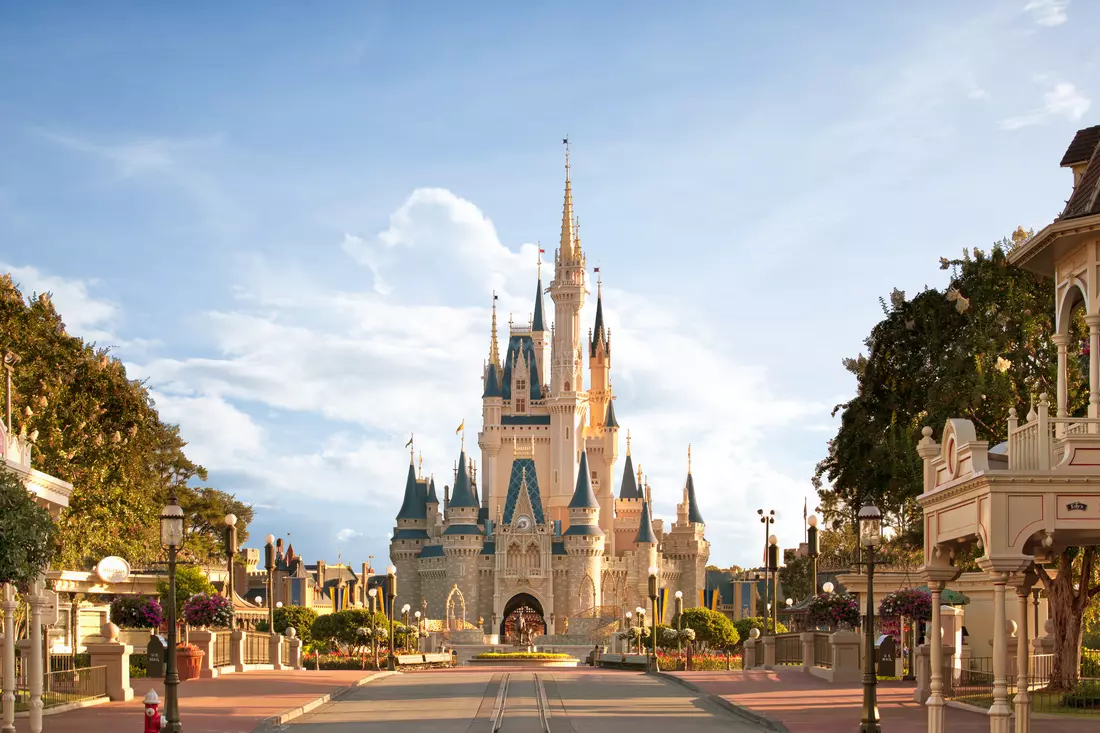


America is used to seeming uniform. Chain cafes on every corner, identical highways stretching for hundreds of miles, suburbs with neatly trimmed lawns and the same signs. It feels like no matter where you are — California, Georgia, or Iowa — the script will be the same.
But if you turn off the main road, leave the highway, and drive another ten to twenty minutes along a secondary road, that picture begins to crack. Instead of yet another mall, a town appears that seems it shouldn’t exist here at all. With architecture that doesn’t blend with the landscape. With customs that feel strange for America. With a history that contains more Europe, mysticism, or utopia than the “American Dream” in its usual sense.
Suddenly, you realize that in sunny California there is a Danish village with windmills and bakeries following traditional recipes. In New England, a town turns the tragedy of the witch hunts into part of its identity. Somewhere in the South, streets are draped in Spanish moss, and the past isn’t erased but quietly coexists with the present. There are towns where the German Alps “moved” to the U.S., and former mining settlements that refused to die and became havens for artists, dreamers, and those tired of big cities.
Small towns in the U.S. are not just points on a map or tourist backdrops. They are experiments frozen in time. They were founded by immigrants who did not want to dissolve into the new world, by religious communities dreaming of a “perfect” society, by prospectors chasing quick fortune, and by people fleeing the pressures of civilization — or, conversely, trying to rebuild it from scratch according to their own rules.
Over time, America changed, standardized, and accelerated. But these towns remained. Some by near accident. Some thanks to the persistence of local residents. Some because their very strangeness proved more valuable than trying to be “like everyone else.”
In this article — 10 of the most unusual small towns in the U.S. Towns that have preserved European roots, mysticism, Southern Gothic, or the spirit of the Wild West. And have become living anomalies within a country that usually strives for uniformity — but it is precisely these rare exceptions that make us love it most.

According to the National Trust for Historic Preservation, small towns are far more likely to preserve authentic architecture and cultural identity than major cities, where urban development is typically renewed every 20–30 years.
Solvang, California. Denmark That Didn’t Dissolve: How a No-Compromise Town Emerged in the Heart of California
Solvang is a rare example of how immigrants in the U.S. didn’t simply adapt to their new environment, but gently and persistently adapted it to themselves. This is not a stylized tourist attraction or a “European theme park” version of the Old World. Solvang was conceived as a refuge — a place where Danish culture could continue to thrive without the need to conform to early 20th-century American reality.
- 01. The town was founded in 1911 when a group of Danish Lutherans purchased land in the Santa Ynez Valley. These settlers were not just newcomers, but intellectuals: pastors, teachers, and educators. They were united by the idea of creating a community, not just a settlement. They wanted to speak their native language, educate their children according to Danish principles, practice their faith, and live within their familiar cultural rhythm — without dissolving into the English-speaking majority.
- 02. From the very beginning, Solvang was built with intention. There was no haphazard construction or chaotic blocks. The architecture became an extension of the idea: half-timbered houses, neat facades, and elements of rural Denmark transplanted into a completely different climate and landscape. The Californian sun, dry air, and surrounding vineyards only heightened the surreal feeling — like Europe had mistakenly landed on the wrong continent.
Over time, the town not only preserved its identity but made it its central value. A walk through Solvang today feels like traveling without changing time zones. On the streets:
- Bakeries where the scent of fresh æbleskiver — traditional Danish pancake balls—fills the morning air;
- Shops selling ceramics, textiles, and souvenirs that feel more like family-run stores than tourist traps;
- Cafés with menus in two languages — not as a decorative gesture, but as genuine respect for the town’s roots.
Windmills — the town’s most photographed symbol — appeared later as a deliberate cultural marker. Importantly, Solvang has not become a caricature. There is no aggressive “European” commercialization. Danish culture is presented calmly, almost reservedly, without trying to appeal at all costs.
- 03. Literature and education occupy a special place in the town’s life. This is a direct legacy of its founders. A bust of Hans Christian Andersen stands in Solvang — and here, he is not merely a children’s storyteller. Local museums and cultural centers recognize him as a thinker and a bearer of national character, someone through whom one can understand the Danish mindset. For the U.S., this is a rare case of such a deep engagement with European cultural heritage, free from simplifications or stereotypes.
- 04. It is also interesting how Solvang integrated with its surroundings over time. It is located in one of California’s wine regions and gradually became part of the state’s wine culture. Yet even here, the town retained its identity: tastings are conducted at a European pace, without haste or ostentation, and many wineries resemble rural estates more than industrial operations.
Today, Solvang is:
- A living reminder that immigration to the U.S. was not only economic but also cultural;
- An example of how a small town can preserve its identity for over a century;
- A place where Europe and America coexist peacefully, without conflict.
Solvang does not try to be “unusual.” It has simply remained true to itself — and that is precisely why it feels so striking against the backdrop of a country accustomed to uniformity.
Salem, Massachusetts. When Fear Becomes Memory: A City That Learned to Live with Its Shadow
Salem is known by everyone — even those who have only a vague understanding of U.S. history. Its name has long been synonymous with witches, curses, and dark legends. But that reputation is only the surface. In reality, Salem is one of the most complex and painful towns in American history, a place where fear once overpowered reason, law, and human dignity.
Salem’s history in the 17th century began quite typically for New England. It was a strict Puritan port town governed by rigid religious rules. Faith was not a private matter but a societal regulator: it dictated behavior, thought, and even acceptable emotions. Any deviation from the norm was perceived as a threat not only to the individual but to the entire community.
- 01. 1692: How Collective Hysteria Was Born
The witch trials of 1692 did not arise from nowhere. Several factors fueled them:
- Religious fanaticism and fear of “sin”;
- Social conflicts and property disputes;
- Unexplainable illnesses;
- Life in constant anticipation of disaster — from crop failures to wars.
Accusations of witchcraft became a convenient tool. A mere hint, rumor, or personal grudge was enough. The judicial system of the time did not require evidence as we understand it today. “Spectral evidence”, dreams, and visions were taken seriously.
As a result, dozens were arrested, 20 were executed, and hundreds were imprisoned or socially ostracized. Many of the accused were respected members of the community. It was a moment when fear proved more contagious than reason.
- 02. A Town That Didn’t Deny Its Past
After the trials, Salem fell silent for a long time. For centuries, the topic of witches was uncomfortable and painful. Yet over time, the town made a rare choice for human communities: not to forget, but to understand.
Instead of turning the tragedy into farce or trying to erase it from memory, Salem began to engage with its past as a lesson. Here emerged:
- Museums that critically and thoroughly examine the trials;
- Memorials dedicated to the victims;
- Educational programs and public discussions.
Important: In Salem’s best museum spaces, witches are not romanticized. The focus is not on magic, but on people — and on the fear that can destroy society from within.
- 03. Modern Salem: Between History and Living Culture
Today’s Salem is much more than its October festival. Yes, every year the city experiences a tourist surge when Halloween transforms the streets into a theatrical stage. But behind this spectacle lies a deep and multi-layered cultural life. Salem offers:
- Well-preserved New England architecture from the 17th–19th centuries;
- Historic ports, merchant houses, and maritime heritage;
- Independent bookstores and art galleries;
- An active community of historians, artists, and researchers.
The city lives not only in the past. It uses history as context, not as the sole content.
- 04. Witches as Symbol, Not Attraction
The most important distinction of Salem from other “mystical” tourist spots is its tone. Here, the witch is not a costume or souvenir, but a metaphor. A symbol of how easily a society can designate an enemy when living in fear and uncertainty.
This is why Salem remains relevant. Its story is not about the 17th century — it is about any moment when people are willing to abandon critical thinking for the illusion of safety.
Fun Fact: In 1957, the authorities of Massachusetts officially exonerated the last accused in the Salem trials. Nearly 265 years passed before the state acknowledged the judicial error — a rare and illustrative act of historical responsibility.
Salem is a rare example of a town that turned collective trauma not into a cheap attraction, but into an opportunity for honest conversation about fear, power, and responsibility. That is why it remains more than just a tourist destination — it is a place that makes you think.
Savannah, Georgia. A City That Refuses to Rush: Southern Gothic Beneath the Canopy of Oaks
Savannah is one of those cities where you immediately feel: here, rushing is not the norm. Steps slow down on their own, voices soften, and your gaze lingers on details — the patterns of wrought-iron balconies, cracks in brick facades, long strands of Spanish moss hanging from centuries-old oaks. You don’t enter Savannah — you gradually immerse yourself in it.
The city was founded in 1733 by General James Oglethorpe and from the very beginning was conceived as an experiment. Its layout is a rare example in America of an 18th-century pre-planned urban design. A clear street grid, symmetrical blocks, and green squares scattered throughout the center create a sense of order that has not faded over time but instead accumulated layers of history.
- 01. The City of Squares and Shadows
Savannah is famous for its squares — there are more than two dozen, each with its own character. These are not ceremonial spaces but places for pause. People sit on benches, read, talk, or simply observe. What unites the squares is the old oaks, thickly draped in Spanish moss, giving the city its recognizable, slightly ethereal appearance.
Spanish moss is not a parasite, as many tourists think, but an epiphyte. It does not harm the trees; it simply lives alongside them. There is a symbolic parallel here with Savannah itself: the city does not destroy its past but exists alongside it. - 02. Southern Gothic as a Way of Speaking About the Past
Savannah is often called the most “literary” city of the American South — and this is no exaggeration. Here emerged the atmosphere that later gave rise to the southern gothic style. It is not horror in the usual sense, but a way to confront complex, uncomfortable topics: slavery, social inequality, guilt, memory, and beauty tinged with shadow.
Old Savannah mansions do not strive for sterile perfection. Traces of time remain — creaking staircases, darkened walls, slightly tilted porches. All of this creates the sense that the city remembers more than it speaks aloud. It is no coincidence that Savannah has served as the backdrop for numerous books, films, and legends. But unlike other “mystical” locations, there is no forced attempt to amaze. The mystique emerges naturally — from the climate, history, and slow pace of life. - 03. Slow Pace as a Philosophy
The main feature of Savannah is its tempo. People here truly do not rush unnecessarily; conversations are allowed to breathe.
This is not resort-like relaxation or museum silence. It is a conscious rhythm, in which the past is not displaced by the present but integrated with it. Old homes remain inhabited. Historic streets remain active. The city is not frozen in time; it lives, simply without shouting for attention. - 04. Savannah Today: Alive and Contradictory
Modern Savannah is more than just history. It has a vibrant arts scene, design schools, independent galleries, and restaurants offering Southern cuisine without glossy pretension. Even new elements here speak softly, respecting context. The city embraces contradictions: beautiful yet heavy, cozy yet unsettling, welcoming but never intrusive. This is what makes Savannah alive. It does not try to please everyone, nor does it simplify itself for tourists.
Fun Fact: Savannah is one of the few U.S. cities where the historic layout has been almost entirely preserved since the 18th century. Many modern American cities demolished old blocks to make way for development, but Savannah managed to integrate growth into the existing structure without destroying it.
Savannah is neither a resort nor an open-air museum. It is living history, where people continue to reside, cafés remain active, and new meanings are born. A city that does not demand attention but generously rewards those willing to slow down and listen.
Leavenworth, Washington. How One Idea Saved a Town: A Bavarian Mask That Hides a Very Real Life
The story of Leavenworth is one of the clearest examples in the U.S. of how cultural reinvention literally saved a town from disappearing. In the mid-20th century, it was an unremarkable working-class settlement in Washington State, sustained by the timber industry and the railroad. As long as the sawmills were running, the town survived. When the industry declined, Leavenworth teetered on the brink of extinction.
By the 1960s, the situation had become critical: businesses closed, workers left, the downtown emptied, and shops one by one put up For Sale signs. This was the typical fate of many small American towns reliant on a single industry that failed to adapt in time.
- 01. A radical plan that few initially believed in
The solution was unexpected. Instead of trying to restore the past or attract abstract investment, the town decided to completely change its identity. The idea was to transform Leavenworth into a stylized Bavarian village — with Alpine architecture, German culture, and the atmosphere of a European mountain resort.
At first glance, it seemed almost desperate. Leavenworth had no direct historical ties to Germany. It was a deliberate, strategic choice of imagery. But the plan had a key advantage: the natural surroundings — mountains, forests, and river — perfectly suited the Alpine aesthetic. The town approached the transformation seriously. This was not a cosmetic facelift of a few facades but a comprehensive program:
- All buildings in the downtown were required to match the Alpine style;
- Signs, storefronts, and street design were standardized;
- New businesses had to immediately fit into the overall visual language.
- 02. Leavenworth today: when reconstruction becomes tradition
Today, Leavenworth is one of the most recognizable small towns in the U.S. Its image is instantly readable and works year-round. The town thrives on events:
- Oktoberfest, which annually attracts thousands of visitors;
- Christmas markets and illuminations that turn the streets into a postcard;
- Music festivals and themed weekends.
But behind the facades lies a real community. Pretzels are actually baked, beer is brewed, German music is played. Many traditions have been adapted, but they have not been reduced to parody.
- 03. An economy built on identity
The main result of Leavenworth’s transformation is resilience. Tourism provided jobs, supported small businesses, attracted young families, and created a sense of future.
Importantly, residents did not become mere service staff for a theme town — they became co-authors of its image. They uphold the rules, participate in festivals, and invest in the shared impression. - 04. Why it works
Leavenworth is often criticized for being “artificial.” But that is precisely its strength. The town does not pretend to be an authentic historical German village. It openly acknowledges: this is a reconstruction. But a reconstruction done with respect, planned for decades ahead, and embraced by its residents. It is an example of how cultural imagery can revitalize an economy, create a strong tourist brand, and preserve a community that might otherwise have vanished from the map.
Fun fact: In Leavenworth, any new building in the downtown must comply with the Alpine style, regardless of its purpose. Even a bank or pharmacy will look like a Bavarian house — and this strict rule has been key to maintaining the town’s cohesive character.
Leavenworth is not about authentic Germany or copying Europe. It is the story of how a small town found the courage to reinvent itself — and in doing so, survived and thrived.
New Harmony, Indiana. The America That Could Have Been: A Town Where the Future Was Attempted Too Early
New Harmony is a place rarely mentioned in tourist guides — and for good reason. It is one of the most unusual small towns in the U.S., not because of its appearance, but because of the scale of the vision once attempted here. While many American towns grew around gold, trade, or industry, New Harmony emerged around an idea — an idea so bold that, for its time, it seemed nearly impossible.
Its history is the history of utopias — not in a literary sense, but in the most literal way.
- 01. Religious harmony as the beginning of the experiment
At the beginning of the 19th century, the settlement was founded by a religious community of Rappites — German Pietists fleeing persecution in Europe. They sought to create a society based on collective labor, strict morality, discipline, and mutual responsibility.
The name New Harmony was not metaphorical. It was a direct statement of purpose: to build a harmonious society free from the chaos of the outside world.
The commune was surprisingly successful economically. Crafts, agriculture, and education flourished. Yet the religious strictness, celibacy, and insularity made the community unstable in the long term. Eventually, the Rappites left the town, leaving behind a well-organized infrastructure — and a void soon filled by other visionaries. - 02. A socialist utopia ahead of its time
The next chapter in New Harmony’s history is linked to Robert Owen, a British industrialist and social reformer. In 1825, he purchased the settlement with the ambitious goal of creating a rational, just society of the future. Owen envisioned a world without classes and exploitation, with free and compulsory education, gender equality, and freedom of thought, science, and self-expression.
For the early 19th century, this sounded almost fantastical. New Harmony became a magnet for intellectuals, educators, scientists, and reformers — people who believed society could be redesigned like a factory or a school. - 03. Why the utopia didn’t survive
The problem in New Harmony was not the ideas, but the people. Too many different personalities arrived: idealists without practical skills, scholars unprepared for daily life, reformers with conflicting visions.
There was no clear governance, accountability, or labor allocation. Freedom was too broad, discipline too weak. Within a few years, the project collapsed.
But it’s important to note: it was not a failure in the usual sense. Many of New Harmony’s ideas — coeducation, gender equality, and a scientific approach to learning — later became standard in American society. Just not immediately. - 04. A town that remains thoughtful
Today, New Harmony is a quiet, almost meditative town. There is no hustle, no loud events, no tourist crowds. But there is a sense of space where serious thinking was once attempted. Modern New Harmony offers:
- Museums and archives detailing communal experiments;
- Buildings reflecting traces of utopian architecture;
- Parks and riverfronts inviting slow walks and contemplation.
There is a strange calm here — not sleepy, but focused. As if the town is still asking a question with no final answer: what if it had worked?
Fun fact: New Harmony was among the first places in the U.S. where women had access to full education on equal terms with men. For the 1820s–1830s, this was radical and bewildering to contemporaries.
New Harmony is America of the alternative path. Not a land of winners and capital, but a land of ideas, doubts, and attempts to make the world fairer. A utopian town that didn’t survive as a system but remains as a reminder that sometimes the future begins too early.
Taos, New Mexico. Where America Began Before America: A Town of Living Tradition and Voluntary Solitude
Taos is one of those rare U.S. towns where the sense of time works differently. Here, it’s impossible to draw a clear line between the “ancient” and the “modern,” between culture and everyday life. Taos doesn’t reconstruct its past or turn it into a stage set — it simply continues to live within it. This is why it attracts those seeking depth in America rather than speed and scale.
The heart of the town is Taos Pueblo, a settlement of the indigenous people that has existed for more than a thousand years and is still inhabited. This is not a museum or archaeological site — it’s a living community, where people work, pray, celebrate, and pass traditions from generation to generation. For the U.S., a relatively young country, this is almost paradoxical.
- 01. The Pueblo as the foundation of identity
Taos Pueblo is an architectural and cultural phenomenon. Multi-story adobe buildings, constructed without a single nail, have stood for centuries. They are constantly maintained and manually repaired, and therein lies the key point: culture does not freeze — it is preserved through work and care. The Pueblo has shaped the character of the entire region:
- Respect for the land and natural cycles;
- Ritual in daily life;
- A sense of community rather than individual superiority.
Even modern Taos — with its galleries, cafés, and art residencies — exists in the shadow of this ancient logic.
- 02. Spanish heritage and layers of history
When the Spanish arrived in the region, they did not erase the indigenous culture but layered their own traditions on top. Catholic missions, colonial architecture, and hybrid practices emerged, where religious rituals intertwined with local beliefs.
This cultural “layered cake” became a unique feature of Taos. History here does not move in a straight line — it accumulates, and each layer remains visible. - 03. Artists seeking silence
In the late 19th and early 20th centuries, Taos unexpectedly became a magnet for artists and writers. They were drawn not so much by the exotic surroundings as by the quiet and isolation. Far from cultural centers, Taos offered freedom. This led to the Taos art colony — a community exploring new forms, engaging with the land, the body, and primal themes, while rejecting the commercialization of art. Unlike New York or Los Angeles, Taos didn’t impose itself. It allowed solitude without requiring escape. - 04. An alternative to “big America”
Over time, Taos attracted not only artists but also those weary of the standard American narrative. Writers, philosophers, seekers of spiritual practices, and people who valued simpler, slower living settled here. Taos became a cultural refuge — a place to step off the race without leaving reality behind. - 05. Culture without gloss
What sets Taos apart from many “creative” U.S. towns is the absence of stylization. Indigenous culture is not turned into souvenirs, rituals are not staged for tourists, and art does not have to be sold.
Taos is a town where culture is vulnerable. It must be respected, not consumed. This is felt at every step: in the quiet of museums, the simplicity of streets, and the way locals speak of their past.
Fun fact: Taos was one of the first U.S. towns where the indigenous population secured legal recognition of their lands and traditions — not as historical artifacts, but as a living community with self-governance rights.
Taos is America that did not rush to become America. A town where ancient culture did not retreat into the past but learned to coexist with modernity. A place that doesn’t explain itself or try to please, yet lingers in memory — precisely because it lives by its own rules.
Marfa, Texas. Emptiness as Meaning: A Town Where Art Speaks Louder Than Words
Marfa is one of the most paradoxical places in the U.S. This small town in western Texas, surrounded by desert, wind, and endless horizons, has become a cult landmark on the contemporary art map. Not because it was convenient, trendy, or promising — but because here, silence proved more important than anything else.
Until the 1970s, Marfa was an unremarkable settlement: a former military base, a few scattered houses, a handful of stores, and a sense of being at the edge of the world. Everything changed when the artist Donald Judd arrived — a key figure in American minimalism. He sought a place where art could be displayed not in a gallery, but in a space that itself becomes part of the work.
- 01. Donald Judd and the idea of radical space
For Judd, Marfa was not a compromise but a solution. There was no visual noise, no advertising, no dense construction. The desert provided what no art capital could — a complete contextual frame.
The artist purchased former military buildings and transformed them into exhibition spaces. Sculptures, installations, and architectural forms were placed not as exhibits, but as elements of the environment. Nothing extra, no explanatory text, no decoration. The viewer remained alone with form, light, and space. Thus, Marfa became not just an art center, but a laboratory of perception. - 02. The town that stopped being a backdrop
Over time, a new ecosystem formed around Judd’s projects. Marfa saw the emergence of contemporary art galleries, artist residencies, minimalist architecture that did not compete with the desert, and small spaces designed for conversation rather than events.
Importantly, Marfa never tried to become a “cultural capital.” It remained small, sparse, and almost elusive. And this is precisely what made it compelling. - 03. The mysterious Marfa lights
An enduring part of the local myth is the Marfa Lights. For over a century, strange glowing orbs have appeared on the horizon, sometimes approaching, sometimes vanishing. They were seen long before tourists and artists arrived.
Scientists have proposed various explanations — from atmospheric phenomena to car headlights’ reflections — but no theory has been universally accepted. As a result, the lights became part of the town’s identity, symbolizing that not everything needs to be fully explained. In Marfa, the mystery is a state of being, not a tourist attraction. - 04. Minimalism as a way of life
Marfa affects not only vision but also the rhythm of thought. Here:
- There are few events, but many pauses;
- Few words, but plenty of space;
- Few familiar landmarks.
For some, this is unbearable. For others, liberating. Marfa doesn’t entertain, explain, or persuade you to stay. It simply exists — and invites you to adapt to its scale.
Fun fact: Marfa still follows Judd’s principle: some art pieces cannot be moved or altered because they were conceived as inseparable from the landscape. Here, art is as firmly tied to place as buildings are to their foundations.
Marfa is not for everyone. It’s a town that demands inner silence and a willingness to exist without familiar anchors. But for those seeking a reset, a new perception, or simply a space to think, Marfa becomes more than a point on the map — it becomes an unforgettable experience.
Helena, Montana. When Gold Becomes Art: A Town Built on Luck and Ambition
Helena is a city that owes its existence not to careful planning, but to sheer luck. In 1864, a rich gold deposit was discovered in the region, and within a few years, a small camp of gold prospectors grew into one of the most prosperous towns of the Wild West. But Helena stands apart from most “gold rush” towns of the era: here, wealth didn’t destroy — it built.
- 01. From camp to state capital
The first settlers arrived with picks, shovels, and dreams of quick fortune. The gold rush attracted not only miners, but also entrepreneurs, lawyers, bankers, and craftsmen. While most temporary settlements quickly vanished once the mines were exhausted, Helena endured and grew into a full-fledged city.
By 1875, Helena became the capital of Montana. Here, gold brought not just profit, but ambition. Those who had struck it rich did not rush away; they built houses, schools, banks, and theaters — with grandeur and the desire to display their success. - 02. Architecture that tells of wealth
A walk through Helena’s center is like stepping into the 19th century. Here:
- Luxurious mansions with columns and stucco, reflecting the “gold rush” style;
- Massive stone banks and theaters built with ambitions of permanence;
- Narrow streets that preserve the frontier spirit, yet remain orderly and maintained.
Helena’s mansions are more than houses — they are symbols of sudden wealth achieved in a single generation. Each building tells the story of a person who took a risk, found gold, and wanted the world to know: “I am here, and I have succeeded.”
- 03. Social life and frontier spirit
Despite the luxury, Helena retained the spirit of the American frontier. People of all professions and backgrounds mingled: miners, entrepreneurs, immigrants, and adventurers. Social life flourished — clubs, theaters, banquets, fairs — all set against Montana’s rugged landscape.
This contrast of wealth and wild, mountainous terrain gives a unique sense of a city that grew out of chaos yet remained connected to nature and history. - 04. What makes Helena special
Helena is a rare example of a gold rush town where wealth left not ruins, but a cultural and architectural legacy. Many “gold towns” turned into ghost towns once the mines ran dry. Helena endured, becoming a living, beautiful city where the past is palpable in every street, and the architecture tells stories of success, risk, and human ambition.
Fun fact: In the 19th century, Helena was one of the wealthiest U.S. capitals per capita. Some residents were so rich they imported marble and furniture from Europe, decorating their homes with expensive stained glass, paintings, and ornamental details now treasured as historic assets.
Helena is a city of gold and ambition, where the history of the Wild West hasn’t dissolved into legend but left a tangible, enduring mark. It’s a place where luck and courage were turned into architecture and culture, preserving the frontier spirit for centuries.
St. Augustine, Florida. Where America Began Before the Plymouth Colony: The Spanish Legacy on the Atlantic Coast
St. Augustine is a unique city, often overshadowed in stories about America’s “first settlers.” Founded by the Spanish in 1565, a full 55 years before the Plymouth Colony, it is the oldest continuously inhabited city in what is now the United States. History is palpable here — in brick forts, narrow cobblestone streets, Catholic churches, and even in the daily life of its residents.
- 01. Spanish forts: stone witnesses to history
The main architectural landmark of St. Augustine is Castillo de San Marcos, built from brick and a unique local limestone called coquina. This material, made from compressed shells and sand, is both strong and beautiful. The fort has witnessed more than any history textbook:
- Sieges by pirates and British forces;
- Shifts of power between Spain, Britain, and the United States;
- Strategic maneuvers of colonial armies.
A walk along San Marcos’ bastions allows visitors to touch the 16th century, sense the scent of gunpowder from the past, and imagine life in those distant times.
- 02. Narrow streets and the atmospheric city center
The city center preserves a European layout with winding, narrow, cobblestoned streets. There’s no rushing from “point A to point B.” The city encourages slowing down:
- Exploring souvenir shops selling leather and ceramics;
- Stopping at small cafés offering Spanish cuisine;
- Hearing English spoken with a Spanish accent — a trace of cultural blending.
The streets literally breathe history: every building and window tells how European culture intertwined with the American context.
- 03. Catholic heritage and traditions
St. Augustine was built as a colony where religion played a central role. Catholic missions, cathedrals, and monasteries shaped city life as much as markets or the port. Today, saints and religious festivals remain part of the local culture:
- Processions and festivals honoring patron saints;
- Historic Catholic schools and church ensembles;
- Museums dedicated to missionary work and Spanish colonization.
This clearly demonstrates that American history did not begin solely with the Anglo settlers, as textbooks often claim—it was far more layered and complex.
- 04. Museums, homes, and living history
St. Augustine is more than an “open-air museum.” It is a city where history continues:
- Houses from the 16th–18th centuries are still used as homes or businesses;
- Artisan workshops showcase traditions of colonial Spain;
- Guides tell not just myths, but real stories of people, their worries and joys.
Particularly notable is the Cathedral of St. Augustine, the oldest Catholic parish church in the U.S. It reminds visitors that faith and culture were integral to daily life, not decorative elements for tourists.
Fun fact: St. Augustine is the only city in the U.S. to have survived multiple colonial powers while maintaining a continuous identity. Spaniards, British, and Americans each left their mark, but the city remains recognizable — a multilayered painting where every stroke matters.
St. Augustine is a reminder that America is older and more complex than we are usually taught. Here, the past is not only preserved — it lives alongside us, inviting every visitor not just to see historic buildings, but to feel the history that shaped the continent long before the Plymouth Colony.
Jerome, Arizona. The Ghost Town That Refused to Die: Mining History, Art, and the Spirit of Emptiness
Jerome is one of the most famous ghost towns in the United States, with a history that is both tragic and inspiring. Once a thriving mining town on the slopes of Cleopatra Hill in the desert region of Arizona, Jerome was called “the richest town per capita” in the early 20th century thanks to its copper mines, which attracted people from across the country.
Like many mining towns, Jerome experienced a rapid boom and a sudden collapse. When the mines closed, the population dropped from tens of thousands to just a few hundred. Homes, streets, and shops began to empty, and it seemed Jerome was destined to become another vanished town of the Wild West — a historical illustration of gold and copper rushes.
- 01. Mining spirit and architecture
Jerome has preserved the structure and appearance of a mining town:
- Narrow streets and steep mountain slopes connected by wooden walkways;
- Old houses clinging to their foundations as if holding onto life;
- Rusting remnants of mining machinery emerging from the ground like industrial monuments.
This architecture doesn’t aim to be polished or tourist-friendly. It is raw, honest, and creaks with time, creating a sense of a place where every crack and squeak tells its own story.
- 02. How Jerome was reborn
The turning point came when artists and alternative-lifestyle seekers began inhabiting the town. They saw beauty where most saw only ruins. New initiatives included:
- Small contemporary art galleries in abandoned buildings;
- Workshops for artisans and ceramists;
- Cafés and bars using old miners’ tables as interior elements.
This artistic intervention gave Jerome a second life. The town did not become a museum — it continues to live, even if life here is slower. Visitors come not only to look, but to feel the atmosphere of survival and revival.
- 03. Ghostly beauty
Jerome is called a “ghost town,” but the term is not literally accurate. People still live here, which is its unique feature. The town’s ghost is not an absence of life, but a preservation of memory, where every corner recalls the mining rush, adventure, and human stories. Walking through Jerome, you experience:
- Slowly drifting light through wooden blinds;
- The wind playing with rusted sheets and wall cracks;
- The whisper of history that cannot be faked.
This atmosphere makes Jerome one of the “most alive” ghost towns in the U.S.
Fun fact: During the 1917 flood, water rushed down the mountains and destroyed many mining structures. Yet the residents loved the town so much that they rebuilt it again and again, creating a tradition of resisting oblivion.
Jerome is a story of a town that could have died but chose to live on its own terms, in harmony with the past and with those who see beauty in cracks and emptiness. Here, the past doesn’t hide in museums — it lives on the streets, in the buildings, and in every detail that cannot be replicated anywhere else.
America’s Small Anomalies: More Towns Where the Ordinary Turns Extraordinary
Besides famous names like Solvang or Savannah, the USA is full of small towns that seem to exist out of the country’s usual rhythm. They hold unique histories, architectural features, or cultural experiments that you won’t find anywhere else. Below are a few such places, each with its own distinctive atmosphere.
- 01. Winchester, California — the house that builds itself
Winchester is best known for the “Winchester House”, built by Sarah Winchester, heir to the firearms dynasty. The house astonishes with its chaotic architecture: staircases lead into ceilings, doors open into nothing, and corridors twist like a labyrinth.
The reason for such oddities was Sarah’s belief in the spirits of those killed by Winchester rifles. She thought architecture could soothe the souls and built the house without a plan until her death. Today, Winchester is not only a tourist attraction but also a symbol of how personal faith and fear can give rise to an architectural phenomenon. - 02. Fredericksburg, Texas — Germany in the middle of the prairies
Fredericksburg was founded by German immigrants in the 19th century. They brought traditional German architecture, gardens, vineyards, and cultural celebrations like Oktoberfest.
Unlike Leavenworth, Fredericksburg developed organically — as a working town with German roots, not a tourist project. Here, you can experience cultural heritage without “reconstruction,” enjoying local cuisine, wine, and festivals. - 03. Cape Cod, Massachusetts — lighthouses and fishing charm
On Cape Cod, many small towns have preserved the soul of New England fishing communities. Narrow streets, old lighthouses, wooden houses with whitewashed facades, piers, and boats create the feeling that time has stopped.
Notably: there are no large tourist megaprojects — life here continues naturally, and each day reminds visitors how America was built around fishing and maritime culture. - 04. Madisonville, Colorado — a mountain resort out of time
Madisonville is a mountain town known for winter sports and Alpine-style architecture. Here you can find:
- Historic wooden hotels from the 19th century;
- Stone bridges and streets laid out during the gold rush;
- An atmosphere where you can feel the spirit of the frontier while enjoying solitude.
The town isn’t overrun with tourist attractions, which gives a sense of living history integrated into the present.
- 05. Asheville, North Carolina — art and mountains
Asheville combines mountains with creative energy. It attracted artists and artisans in the 20th century and is now known for its galleries, cafés, music festivals, and Art Deco architecture.
The main feature: the city maintains a balance between the creative scene and nature, making every corner feel part of a single, living organism.
These towns show that small-town America is incredibly diverse. Here you can find:
- Experimental utopias;
- Immigrant enclaves;
- Living ghost towns;
- Places where art and nature intertwine with everyday life.
Each of these places is a living story that can’t be fully experienced through standard tourist routes but is rewarding to discover if you slow down and pay attention.
Traveling Through America’s Unusual Towns: Tips and Tricks for Tourists
Small and unusual towns in the USA aren’t just beautiful Instagram shots — they are living history, culture, and unique atmosphere. To make your trip comfortable, engaging, and memorable, it’s important to keep in mind a few details that rarely appear in standard tourist guides.
- 01. Plan your itinerary with extra time
Unlike big cities, small towns don’t follow a strict schedule. Shops and cafés may open late and close early. In some places, museums operate only a few hours a day. Tip:
- Allow at least half a day per town, ideally a full day or two.
- Check opening hours on official websites or local Facebook pages.
- Give yourself permission to wander without a map — in such towns, random discoveries often become the main highlights.
- 02. Look for local events and festivals
Small towns live through events often unnoticed by mass tourism:
- Harvest festivals in Leavenworth;
- Art fairs in Taos;
- Oktoberfest and Christmas markets in Bavarian towns of Texas and Washington.
Tip: Check the events calendar in advance and try to attend local celebrations — it’s the best window into a town’s culture.
- 03. Don’t fear small roads
Many unusual towns are far from highways. Roads may pass through mountains, deserts, or rural landscapes. Tip:
- Use a GPS and offline maps if the signal is weak;
- Keep an eye on fuel levels — gas stations may be scarce;
- Consider the journey part of the adventure: the scenery outside often rivals the towns themselves.
- 04. Talk to the locals
In small towns, people often remember every new visitor. It’s a unique chance to learn history firsthand:
- Bartenders and café owners can share legends and secrets;
- Local guides show unofficial sights;
- Many of the most vivid memories, unavailable in guidebooks, are born from these interactions.
- 05. Dress comfortably and according to the climate
Small towns can have extreme weather variations:
- In the mountains (Madisonville, Jerome), it’s colder than in lowlands;
- In deserts (Marfa), hot by day, cold at night;
- In coastal towns (St. Augustine, Cape Cod), it’s often windy and rainy.
Tips: Layered clothing is better than a single warm sweater. Comfortable shoes for uneven streets and stairs are a must. Sunglasses and a hat help in desert and mountain regions.
- 06. Explore small museums and workshops
Even if a town seems tiny, almost every one has small museums, art studios, and craft workshops that tell more than large exhibitions:
- Winchester House in California;
- Minimalist galleries in Marfa;
- Museums of communal experiments in New Harmony.
Tip: Don’t skip small corner museums — they often become the heart of a town.
- 07. Prepare for photography and memories
Small towns surprise with details: signs in Danish, Bavarian façades, miner rails. Tips:
- Photograph not only the “main” sights but also the small details;
- Take notes about places and people — memories of small towns can blur over a year;
- In some towns (e.g., Taos), respect residents’ personal space, especially in Indigenous communities.
- 08. Gastronomy and local products
Travel is not only about buildings and history but also flavors:
- Solvang — Danish bread and æbleskiver;
- Fredericksburg — German beer and sausages;
- Cape Cod — fresh seafood;
- Taos — Mexican and Indigenous culinary traditions.
Small towns let you try original products you won’t find in chain restaurants.
- 09. Book accommodations in advance
In tourist towns (Leavenworth, Savannah, St. Augustine), hotel and rental options are limited, especially during festival or holiday seasons. Tip:
- Book at least a month in advance;
- Consider Airbnb or local guesthouses — they often provide more immersion into the town’s atmosphere;
- In small towns, staying in a historic house can become a story in itself.
- 10. Take your time and enjoy the atmosphere
The main secret of traveling through small towns is slowing down. These places reveal themselves not through checklists of attractions but through the feeling of:
- The sound of footsteps on cobblestones;
- The smell of bread or wet earth;
- Sunlight on the façades of old houses.
City-speed is meaningless here — towns live by their own rhythm.
These tips will help you feel the soul of small-town America and make your trip not just a gallery of photos, but a living experience where history, culture, and people become part of your story.
American Butler — When Travel Goes Beyond the Route
Small, unusual towns in the USA are not tourist props. They are the traces of human choices:
- Preserving a language;
- Escaping pressure;
- Building a utopia;
- Starting over.
It is in such places that America stops being abstract and becomes personal.
You can’t truly understand these towns through a guidebook. It’s important to know when to go, which turns to take, and what to see between the lines. American Butler helps craft trips across the USA not according to a template, but with meaning — taking into account the history, rhythm, and character of each place.
If you want to discover the unexpected America, where every town is a world of its own, we can help make your journey coherent and thoughtfully planned.
Share