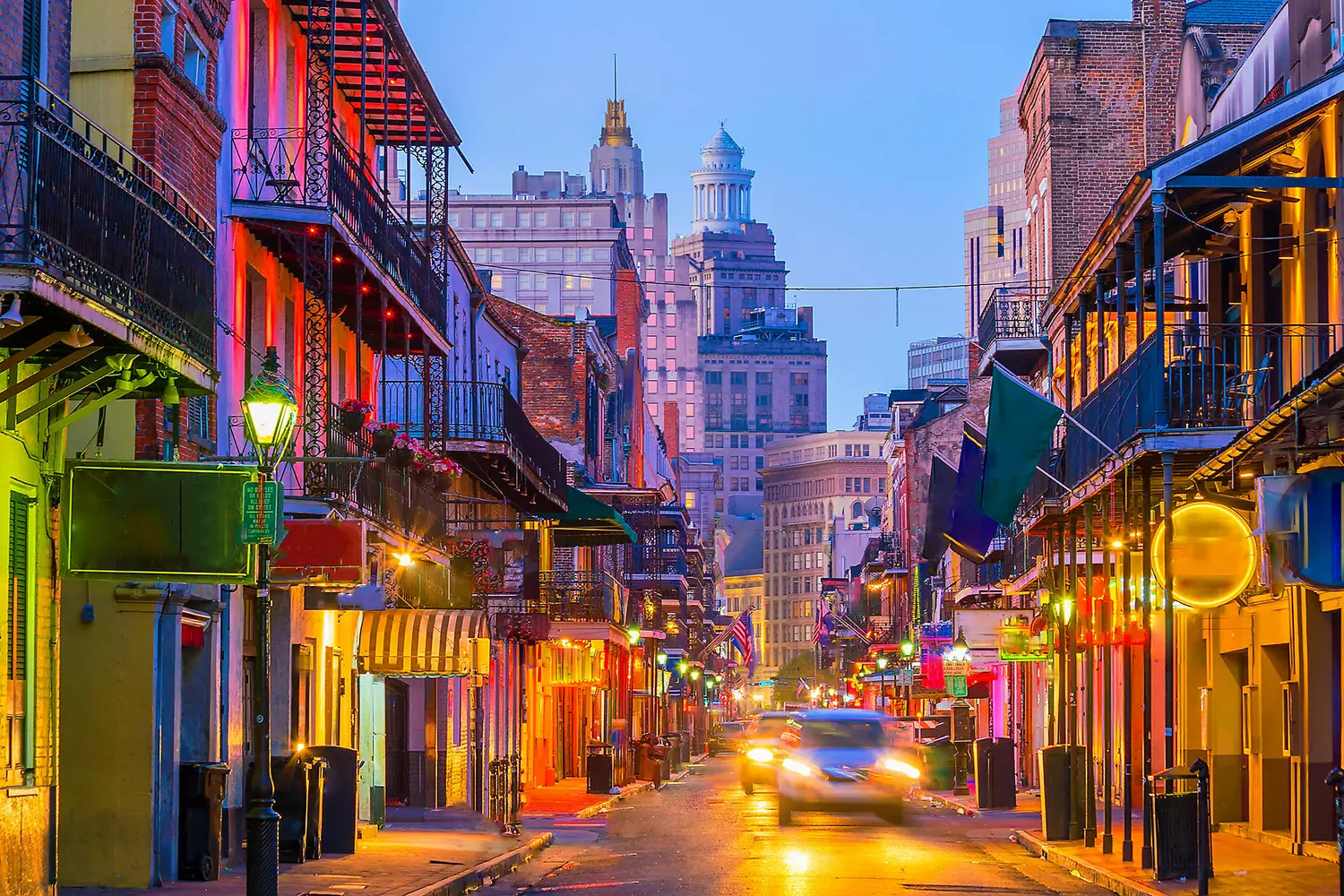


New Orleans is one of the most unique cities in the United States. It is known for its jazz music, vibrant Mardi Gras celebrations, the colonial architecture of the French Quarter, and an atmosphere where dozens of cultures and traditions have blended together. Every year, millions of tourists come here to stroll along famous Bourbon Street, ride historic streetcars, or listen to live music spilling out from every bar. However, beyond the well-known tourist routes lies a place that is essential for truly understanding the history and character of the city.
This place is the Tremé neighborhood and the historic square located here — Congo Square. It is here that the roots of the cultural identity that made New Orleans world-famous can be found. For centuries, this area has served as a meeting point for different peoples, languages, musical traditions, and religious practices. African rhythms intertwined with European musical heritage, Caribbean influences merged with the local traditions of Louisiana, and from this unique cultural blend something entirely new was born.
Tremé is considered the oldest African American neighborhood in the United States, preserving its historical and cultural significance to this day. Events that took place here influenced not only New Orleans but also the development of American culture as a whole. It was in this neighborhood that musical traditions emerged which later became the foundation of jazz, blues, and many other genres. It was also here that social movements took shape, cultural organizations were created, and the heritage of people was preserved — many of whom never made it into history books, yet without whom modern America would look very different.
A special place in the history of the neighborhood belongs to Congo Square — a site that many historians consider one of the most important cultural spaces in North America. In the 18th and 19th centuries, Africans and their descendants gathered here to dance, perform traditional music, exchange news, and maintain a connection with their cultural roots. At a time when such expressions of identity were often restricted, Congo Square became a rare space of freedom that allowed musical and cultural traditions to survive across generations.
Today, walking through Tremé is a journey not only through the streets of old New Orleans but also through the pages of history. Here you can see historic churches, old houses, museums dedicated to the neighborhood’s culture, hear live jazz, and discover traditions that have continued for more than two hundred years. The atmosphere of Tremé is different from the bustling city center: it is more authentic, deeper, and closely tied to the life of the local community.
For many travelers, discovering this neighborhood becomes one of the most memorable experiences of a trip to Louisiana. Here, history is not hidden behind museum glass. It resonates in the melodies of brass bands, is reflected in the architecture of historic streets, lives in family traditions, and can be felt at every step. That is why Tremé and Congo Square are rightfully considered places where one can touch the true soul of New Orleans and see the city the way its residents know and love it.

Some historians believe that without Congo Square, the history of music might have been very different. Many of the rhythms and traditions that became the foundation of jazz were preserved there through African cultural practices.
Minutes from New Orleans’ Main Attractions: The Hidden History of Tremé
Surprisingly, one of the most important historic districts of New Orleans is located just a few minutes’ walk from the places visited by millions of tourists every year. Tremé sits directly north of the famous French Quarter — the district considered the city’s main landmark. However, while the French Quarter is constantly filled with tourists, music from bars, and the noise of festive streets, Tremé offers a completely different atmosphere — quieter, more authentic, and deeply connected to the real history of New Orleans.
There is no clearly visible boundary between the two neighborhoods. While walking, many visitors do not even notice the moment they leave the tourist center and enter one of the most culturally significant districts in the United States. This is why Tremé is often called a hidden treasure of New Orleans — a place located right next to all major attractions, yet still overlooked by many visitors.
- 01. Geographic location of the neighborhood
Tremé occupies the area between the French Quarter and the more modern districts of northern New Orleans. Its central landmark is Louis Armstrong Park — a large urban park that contains the legendary Congo Square. From the main tourist attractions, Tremé is only a few minutes’ walk away, making it one of the most accessible neighborhoods for independent exploration.
Many visitors begin their walk in the French Quarter and gradually move into Tremé, noticing how the city’s atmosphere changes. The busy tourist streets are left behind, replaced by historic homes, shaded sidewalks, and places where history feels much more tangible than in the city’s most famous attractions. - 02. Why tourists often pass it by
The paradox of Tremé is that it is located right next to nearly all of New Orleans’ most iconic landmarks, yet many tourists are unaware of it. The reason is simple: most guidebooks focus on the French Quarter, Mardi Gras, and the city’s entertainment scene. As a result, travelers spend most of their time on well-known streets, not realizing that just around the corner lies a neighborhood that played a key role in shaping American culture.
It was here that jazz began to take shape, African American cultural traditions developed, and a unique local identity was formed. While the French Quarter shows the city’s festive face, Tremé reveals its historical foundation. - 03. Main landmarks of the neighborhood
Despite its relatively small size, Tremé includes several sites of major historical and cultural importance in the United States.
- Louis Armstrong Park
This park is often the starting point for exploring the neighborhood. Named after the legendary jazz musician Louis Armstrong, it lies on the border between Tremé and the French Quarter. It features walking paths, artificial ponds and fountains, performance spaces, monuments to famous musicians, and venues for festivals and community events. However, its most significant feature is the legendary Congo Square located within its grounds. - Congo Square
Perhaps no place in New Orleans attracts as much interest from music historians as this square. In the 18th and 19th centuries, enslaved and free African Americans gathered here to dance, perform traditional music, and preserve the cultural traditions of their ancestors. Many researchers believe that the musical foundations that later led to the creation of jazz were formed at Congo Square. Today, the square appears modest, yet its historical importance is comparable to the most significant cultural landmarks in the country. - St. Augustine Church
Just a few blocks from Congo Square stands one of Louisiana’s most famous churches. St. Augustine Church is considered the oldest African American Catholic parish in the United States and holds a special place in civil rights history. For many visitors, it is not only a religious site but also an important historical landmark that reflects the complex and multifaceted past of New Orleans. - Backstreet Cultural Museum
This small museum offers a deeper understanding of the neighborhood’s culture than many large historical exhibitions. It features Mardi Gras Indian costumes, archival photographs, musical artifacts, materials about jazz funerals, and exhibits dedicated to Second Line traditions. Visiting the museum allows travelers to see Tremé through the eyes of its residents. - Historic architecture of the neighborhood
Even without visiting museums, the neighborhood itself functions as an open-air museum. During a walk, visitors can see 19th-century Creole cottages, traditional shotgun houses, historic churches, civic buildings, and residential blocks that have preserved their original layout. Many of these structures have survived generations of ownership, the Civil War, economic crises, hurricanes, and major urban changes.
- 04. How to get to Tremé
Thanks to its central location in New Orleans, the neighborhood is easily accessible from almost any tourist area. The most common ways to reach it include walking from the French Quarter, taking a streetcar, bus, bike, taxi, or rideshare services. For most visitors, walking remains the best option, as it allows them to gradually experience the transition between historic districts and notice details that are often missed from a car.
On the map of New Orleans, Tremé may appear to be just a small neighborhood next to the tourist center. However, its significance extends far beyond the city itself. It was here that cultural processes emerged that influenced music, art, and social life across the entire country.
That is why exploring Tremé should not be seen as a simple walk through old streets. It is an opportunity to step into a place where the history of New Orleans — and part of the history of modern America — was created.
Why Tremé Matters: The New Orleans Neighborhood That Left a Mark on American History
At first glance, Tremé may seem like just another old neighborhood in New Orleans. There are no skyscrapers, luxury shopping streets, or monumental architectural ensembles that usually attract tourists. Yet behind the modest facades of its historic houses lies a story without which it is impossible to understand not only New Orleans, but also the development of American culture as a whole.
Tremé holds a special place among historic districts in the United States. If Boston is associated with the struggle for independence, Philadelphia with the signing of foundational state documents, and Charleston with the colonial history of the country, then Tremé has become a symbol of cultural diversity, creativity, and the remarkable ability of different peoples to create something new while preserving their own traditions.
This neighborhood is often called the cradle of African American culture in the United States. But its significance goes far beyond that. Here, a unique environment was formed in which peoples, languages, music, religion, and lifestyles from several continents blended together. It was precisely this mix that made Tremé the birthplace of many cultural phenomena that are now considered an integral part of American identity.
- 01. The oldest African American neighborhood in the country
One of Tremé’s defining features is its historical status. It is considered the oldest African American neighborhood in the United States that has preserved its cultural identity to this day. To understand this significance, it is important to recall the historical context. In the 18th and 19th centuries, most African Americans in the South lived under conditions of slavery and were deprived of many rights. However, New Orleans developed along a different trajectory compared to other American cities.
This was largely due to French and Spanish influence. During the colonial period, the city had a relatively large population of free people of color. They were allowed to own property, practice crafts, run businesses, receive education, and participate in civic life — a rarity for that era. These communities gradually formed the foundation of Tremé, which later became one of the most influential cultural centers in North America. - 02. A meeting point of different worlds
Tremé’s greatest strength has always been its diversity. Over the centuries, people of many different backgrounds lived here, bringing their own traditions, languages, music, cuisine, and worldviews. French culture, Spanish heritage, African traditions, Caribbean customs, Creole identity, and American influences all intertwined in the neighborhood.
This blending was not limited to everyday life — it was reflected in architecture, religion, music, and food. As a result, Tremé became a kind of cultural laboratory where new ideas and forms of expression were born. Much of what is now considered natural to New Orleans culture first emerged through this interaction. - 03. A neighborhood where African roots were preserved
In many parts of the United States, descendants of Africans gradually lost connection with their ancestral traditions. In New Orleans, however, the situation developed differently. Due to unique historical conditions, Tremé residents were able to preserve many elements of African culture.
This was reflected in musical rhythms, dance traditions, religious practices, folk celebrations, craftsmanship, and oral storytelling. A particularly important role in this process was played by Congo Square — a gathering place where Africans and their descendants met to socialize, trade, and maintain cultural practices. Many historians consider it one of the most important sites for preserving African heritage in North America. - 04. The cradle of jazz and modern music
Music is central to Tremé’s identity. Jazz, one of America’s greatest cultural achievements, did not appear overnight. It developed gradually through the interaction of multiple traditions, many of which converged in Tremé.
African rhythms, European harmony, Caribbean influences, church singing, military marches, and Louisiana folk music all met and blended here. Over time, these elements merged into a new sound. From this musical environment later emerged jazz, blues, gospel, R&B, soul, and many genres of modern popular music. It is no exaggeration to say that Tremé’s influence can still be heard in music around the world today. - 05. A center of community life
Tremé was not only a cultural hub but also a center of social life. Throughout the 19th and 20th centuries, numerous community organizations, charitable groups, and cultural associations developed here. These institutions helped preserve traditions and support local residents through difficult periods of history.
Many historic districts around the world have gradually turned into tourist showcases. Tremé, however, has preserved its authenticity. Even today, it feels like a living community. Neighbors who have known each other for decades greet one another on the streets. Music flows from open windows. People gather on porches to discuss daily life. During local celebrations, residents come together much as they have for generations.
This sense of everyday life is what makes Tremé truly special. It was not created for tourists — it continues to live its own life, offering visitors a glimpse of authentic New Orleans without staged attractions or artificial scenery.
Over its history, the neighborhood has faced many challenges: economic crises, social changes, natural disasters, and the devastating Hurricane Katrina all deeply affected the community. Yet Tremé preserved its identity. Residents rebuilt homes, maintained traditions, and passed down collective memory to future generations. Today, the neighborhood is seen not only as a historic site but also as a symbol of resilience, community strength, and cultural continuity.
Unlike many historic districts where the past remains frozen, Tremé continues to evolve while maintaining a living connection between past and present. Music is still heard in its streets. Traditional parades still take place. Cultural organizations remain active. Families continue to live in homes that have been passed down for generations.
That is why Tremé is considered not just a historic landmark, but the true cultural heart of New Orleans — a place where history remains part of everyday life and continues to inspire musicians, artists, and creative people from around the world.
From Plantation to Symbol of Freedom: The Remarkable History of the Tremé Neighborhood
The history of Tremé is not only the story of one neighborhood in New Orleans. It is a story of the struggle for human rights, the preservation of cultural memory, and the birth of traditions that later influenced the entire United States. Few American neighborhoods can claim such a rich past, where the colonial era, African American heritage, the rise of jazz, and the early steps of the civil rights movement are so deeply intertwined.
Today, Tremé is known as the cultural heart of New Orleans, but its path to this status took more than two centuries. Each generation of residents left its mark here, turning the neighborhood into a living chronicle of the city.
- 01. How the future Tremé area emerged
In the late 18th century, the area of modern-day Tremé looked very different. It was once a large plantation owned by Claude Tremé de Morand, a French landowner whose name later gave the neighborhood its name. At that time, New Orleans was still a relatively small colonial city. Outside the French Quarter stretched agricultural land, swamps, and plantations.
Landowners gradually began subdividing their estates into smaller plots to meet the growing demand for housing. After Morand de Tremé’s death, his property was sold and divided into individual lots. This marked the beginning of the neighborhood’s formation.
Its proximity to the city center made the area especially attractive. By the early 19th century, residential houses, workshops, small businesses, and public spaces had already begun to appear here. - 02. A neighborhood unlike the others
From the very beginning, Tremé developed differently from many other regions of the American South. In most southern cities, society was rigidly divided along racial and social lines. New Orleans, however, shaped by French and Spanish influence, had a more complex social structure.
Tremé became home to an exceptionally diverse community, including free African Americans, Creoles, people of French and Spanish descent, artisans, musicians, entrepreneurs, members of the middle class, workers, and merchants. A particularly important role was played by free people of color — a unique social group for that era. Many of them owned property, received education, ran businesses, and actively participated in civic life. They became one of the driving forces behind the neighborhood’s cultural and economic development. - 03. A center of civic life in New Orleans
By the mid-19th century, Tremé had already become one of the city’s most active districts. Religious processions, musical performances, public gatherings, cultural celebrations, political meetings, and charitable events regularly took place here.
Schools, churches, and civic organizations were established in the neighborhood. Residents created music clubs and mutual aid societies that helped people support one another during difficult times. This strong sense of community organization played a key role in preserving Tremé’s cultural identity across generations. - 04. Congo Square — a place that changed cultural history
No discussion of Tremé’s history is complete without Congo Square. Since the late 18th century, this square became one of the most extraordinary public spaces in North America. On Sundays, hundreds and sometimes thousands of Africans and their descendants gathered here to dance, play music, and preserve their ancestral traditions.
For many, Congo Square was far more than a place of leisure. It functioned as a cultural center, marketplace, meeting point, and open-air musical stage. It was here that rhythmic patterns emerged which later played a crucial role in the development of jazz. - 05. Attempts to erase Congo Square from history
After the Civil War and Reconstruction, the American South underwent major social transformations. In many regions, historical memory was reinterpreted, and key cultural sites were renamed. Congo Square was no exception.
In the late 19th century, it was renamed Beauregard Square in honor of Confederate general Pierre Gustave Toutant Beauregard, a native of Louisiana. While it may have appeared to be a simple administrative decision, many historians see it as part of a broader effort to marginalize African American heritage in public space.
The name “Congo Square” gradually disappeared from official maps and documents. However, local residents continued to use the original name. In 2011, the city officially restored its historic name — Congo Square — an act widely seen as a restoration of historical justice. - 06. Tremé and the early struggle for civil rights
The neighborhood’s history is not only about music and culture. It was also the setting for events that would later influence the entire American legal system. One of the most famous residents was Homer Plessy.
- Who Homer Plessy was
Homer Adolph Plessy was born in New Orleans into a Creole family. He could easily pass as white, yet under the law he was classified as a person of mixed ancestry. In 1892, Plessy took part in a carefully planned protest against racial segregation. He purchased a ticket in a whites-only train car and refused to move when ordered. He was subsequently arrested. What seemed like a minor incident became historically significant. - The case “Plessy v. Ferguson”
The case reached the U.S. Supreme Court and became known as Plessy v. Ferguson. In 1896, the Court issued one of the most controversial rulings in American legal history, establishing the doctrine of “separate but equal.”
In practice, this decision legalized racial segregation for decades. However, nearly sixty years later, the fight against this doctrine became the foundation of the Civil Rights Movement. Thus, events that began in Tremé ultimately shaped the trajectory of American history.
Throughout its history, Tremé has faced numerous challenges: the Civil War, segregation, economic crises, large-scale migration, Hurricane Katrina, and urban redevelopment. Despite everything, the neighborhood has preserved its cultural identity. Many traditions born here centuries ago continue to live on today.
Music still fills the streets. Second Line parades are still held. Residents take part in community events. Historical memory remains an essential part of everyday life.
Today, Tremé is regarded as one of the most important cultural districts in the United States. Its heritage is studied by historians, musicologists, sociologists, and urban culture experts. But most importantly, Tremé remains a living neighborhood — a place where history has not been turned into a museum exhibit. It continues to exist in music, architecture, family traditions, and daily life.
That is why visiting Tremé is not just a walk through a historic district. It is a journey across multiple eras of American history — from colonial times to the present day.
Congo Square: Where Africa Was Preserved and the Musical Soul of America Was Born
Among all historic places in New Orleans, it is difficult to find a site that has had a greater impact on American culture than Congo Square. Today, the square appears as a quiet corner inside Louis Armstrong Park, where visitors rest in the shade of trees and read commemorative plaques. Yet two centuries ago, this was the stage for events that would ultimately transform the history of world music.
Many historians describe Congo Square as one of the most unique public spaces in North America. It was here that African musical traditions were preserved for decades, at a time when they were gradually disappearing in other parts of the country under the pressure of the slave system. It was here that rhythms emerged that later influenced jazz, blues, gospel, R&B, and virtually all modern popular music.
But the significance of Congo Square extends far beyond music. For thousands of people, this space was a place of memory, communication, trade, spiritual support, and cultural identity preservation — at a time when much of their heritage was under threat of disappearing.
- 01. Why Congo Square became a unique place
To understand the importance of the square, one must imagine New Orleans in the late 18th and early 19th centuries. At that time, Louisiana was under first French and then Spanish colonial rule. The city was home to many different peoples and cultures. A significant portion of the population consisted of Africans and their descendants, many of whom were enslaved.
In most southern states, large gatherings of enslaved people were strictly prohibited due to fears of rebellion. However, New Orleans followed a somewhat different path. City authorities allowed enslaved and free African Americans to gather on Sundays in a designated area outside the city limits. This place eventually became known as Congo Square. What seemed like a minor administrative compromise turned into one of the most important factors in preserving African cultural heritage in North America. - 02. A Sunday people waited for all week
For most enslaved people, Sunday was the only day they could control their own time, even partially. From early morning, people would travel from all parts of the city and surrounding areas. Some walked for miles just to be among their communities and relatives.
By midday, Congo Square would transform into a vibrant open-air cultural center. Thousands of people gathered in groups based on shared origins, interests, or musical traditions. Musicians, dancers, craftsmen, traders, storytellers, and spiritual leaders all came together. For many, these gatherings were a vital source of connection, identity, and cultural survival. - 03. Music that could not be silenced
The defining feature of Congo Square was music. It played almost continuously throughout the day. Contemporary accounts describe dozens of rhythms and melodies occurring simultaneously. A wide variety of instruments were used: drums, banjos, maracas, kalimbas, wooden percussion instruments, and handmade string instruments.
Drums played a particularly important role. In many parts of North America, African drumming was restricted or banned altogether, as authorities feared it could be used for communication between enslaved people. In New Orleans, however, these traditions survived more openly for a longer time. Historians believe that the preservation of complex rhythmic structures here became one of the key foundations for the later emergence of jazz. - 04. Dance as a form of memory preservation
At Congo Square, music never existed separately from dance. In many African cultures, movement was not simply entertainment but a form of collective memory and knowledge transmission between generations. Dozens of different dance forms were performed here, some with religious meaning, others connected to celebrations or community rituals.
European travelers often came specifically to witness these gatherings. Many left detailed descriptions, noting the extraordinary energy, complex rhythms, and high level of skill. These accounts help modern researchers partially reconstruct the atmosphere of those historic gatherings. - 05. More than music: market, news, and family reunions
Although Congo Square is best known today for its musical legacy, its role was much broader. It functioned as a social hub for the African American community. People met relatives, exchanged news, sold goods, and maintained social ties.
For many families, Sunday gatherings at Congo Square were the only opportunity to see loved ones who lived or worked in different parts of the city or on distant plantations. - 06. Africa preserved in New Orleans
One of the most remarkable aspects of Congo Square’s history is the preservation of diverse African cultural elements. People from different regions of West and Central Africa brought with them musical traditions, languages, religious practices, craftsmanship, and folk customs.
Over time, these elements began to blend with European and Caribbean influences, forming the unique Creole culture of New Orleans. Many researchers believe that nowhere else in North America was African heritage preserved as vividly as here. - 07. How Congo Square influenced the birth of jazz
When people refer to New Orleans as the “birthplace of jazz,” Congo Square is often at the center of that story. Jazz did not emerge overnight or through a single individual. It developed gradually over many decades.
However, it was here that essential conditions for its emergence took shape: African rhythmic traditions, European musical systems, Caribbean influences, American folk music, church singing, and marching band traditions all intersected.
From this fusion emerged a new musical language that later shaped not only the works of Louis Armstrong and Jelly Roll Morton, but also countless genres of 20th-century music.
Today, Congo Square remains one of the most significant historical sites in Louisiana. It hosts music festivals, cultural events, historical reenactments, educational programs, outdoor concerts, and public celebrations. Visitors can see commemorative markers, walk through the space, and imagine the sound of drums, songs, and voices that once filled the square.
That is why Congo Square is not just a tourist attraction. It is a symbol of memory, freedom, and cultural heritage — a place where the past of New Orleans still feels vividly present, and where the story of music that changed the world truly began.
Drums That Changed the World: How Congo Square Sounded and Why Its Music Has Survived for Centuries
Today, standing on the grounds of Congo Square in Louis Armstrong Park, it is difficult to imagine that this place was once one of the loudest, most vibrant, and emotionally charged spaces in North America. Now, visitors hear the voices of tourists, the rustling of trees, and the distant sounds of the modern city. But two hundred years ago, the square was filled with an entirely different kind of music — music that would later change not only New Orleans, but the entire global musical landscape.
For the modern visitor, Congo Square may appear to be just a historical landmark. For people in the 18th and 19th centuries, however, it was a place of freedom, self-expression, and cultural memory preservation. Every Sunday, the square transformed into a vast open-air stage where dozens of musical traditions, languages, and peoples met.
It was here that the rhythms were born that, across generations, would become the foundation of jazz, blues, gospel, ragtime, rock and roll, and many other genres.
- 01. A Sunday morning people waited for all week
Imagine New Orleans in the early 19th century. The city slowly awakens after a humid night. Narrow streets fill with people. From all directions, men, women, and children move toward the outskirts of the city. Some walk for hours. Others arrive by cart or boat. They all share the same destination: Congo Square.
For many Africans and their descendants, Sunday was the only day when they could briefly step away from exhausting labor and gather with people who shared their languages and traditions.
By midday, the square became a true cultural hub. Enslaved people from nearby plantations, free African Americans, Creoles, musicians, artisans, traders, curious city residents, and foreign travelers all gathered here. Contemporary accounts suggest that attendance sometimes reached several thousand people. - 02. A musical symphony without a conductor
One of the most remarkable features of Congo Square was the absence of a single musical center. There was no stage, no concert hall, and no organized orchestra. Music emerged simultaneously in dozens of different corners of the square.
Drums sounded in one area. Traditional songs were performed in another. Wooden percussion instruments set rhythms nearby. Improvised vocal lines echoed elsewhere. All of it blended into a vast soundscape that might have seemed chaotic to outsiders, yet followed its own internal logic. Observers compared it to a living organism in which every participant became part of a shared rhythm. - 03. Instruments of the square
Historical accounts allow us to reconstruct the musical world of Congo Square with considerable accuracy. Among the most common instruments were African drums of various sizes, early forms of the banjo, kalimbas, rattles, maracas, wooden percussion instruments, handmade string instruments, horns, and wind instruments.
Drums played a central role. For many African cultures, the drum was not merely a musical instrument — it was a means of communication, information transfer, and spiritual expression. Rhythm became the primary language of Congo Square. Music historians believe that many defining features of jazz later emerged from this preserved rhythmic complexity. - 04. Dance as an extension of music
At Congo Square, music and movement were inseparable. Dance was as essential as instrumental performance. Witnesses described numerous dance circles where participants demonstrated extraordinary skill. Some dances were celebratory, others ritualistic or spiritual, and some resembled friendly competitions.
In African traditions, dance was a form of communication and emotional expression. As a result, the square became a space where music and movement merged into a single living expression. - 05. Why this was only possible in New Orleans
Historians still consider Congo Square an exception for its time. In many southern states, large gatherings of enslaved Africans were strictly prohibited, especially those involving drums or collective dance.
Louisiana, however, retained certain traditions rooted in French colonial law. The Code Noir allowed limited forms of cultural and religious expression for enslaved people — restrictions that were still harsh by modern standards but more permissive than in other regions of North America.
This created a unique situation in New Orleans, where African musical traditions survived longer and more fully than elsewhere. Congo Square is often described as a musical bridge between Africa and America. - 06. From the rhythms of the square to the birth of jazz
No musical genre appears overnight. Jazz evolved over decades under the influence of many cultural forces. Congo Square played a unique role in this process.
It was here that African rhythms, European musical theory, Caribbean influences, Creole traditions, church singing, and folk music of Louisiana began to interact. Musicians absorbed ideas from one another, adapted them, and created new forms of expression.
Over generations, this process led to the emergence of jazz — a genre that would become one of America’s defining cultural symbols. It is no coincidence that many researchers call Congo Square the true cradle of jazz. - 07. How the square inspired Louis Moreau Gottschalk
The influence of Congo Square extended far beyond New Orleans. One of the first major composers inspired by its music was pianist and composer Louis Moreau Gottschalk.
Born in New Orleans, he grew up surrounded by the rhythms and melodies of African American musical culture. In 1848, he composed the famous piano piece “Bamboula”, based on rhythms and motifs closely linked to the traditions of Congo Square.
For European audiences, Gottschalk’s music was a revelation — one of the earliest moments when African American musical elements entered classical music and gained international recognition. - 08. The making of a legend
Interestingly, Congo Square’s global fame was shaped not only by musicians but also by 19th-century writers, journalists, and researchers. Figures such as George Washington Cable and Lafcadio Hearn played a major role in bringing its history to a wider audience.
They described Congo Square as an exotic and unique place where ancient African traditions had survived. While some of these accounts were romanticized, they helped establish the square’s reputation far beyond Louisiana.
The most remarkable fact is that the story of Congo Square did not end in the 19th century. Despite periods of restriction, renaming, and attempts to erase its past, its musical tradition continues to survive. On Sundays, drum circles still form. Musicians gather, improvise, dance, and communicate — continuing a tradition passed down through generations.
While today’s gatherings are not exact replicas of historical events, the essence of collective musical expression remains. Congo Square is therefore not only a monument of the past but also a living symbol of cultural continuity.
Standing there today, it may seem like just a quiet historic site. But if one listens closely to its history, it becomes clear: the echo of Congo Square still resonates across the world. It can be heard in New Orleans jazz improvisations, Mississippi blues, church gospel, funk, soul, and rock and roll. Even modern pop and hip-hop carry rhythmic principles that trace back to those Sunday gatherings.
In essence, Congo Square is one of the few places on Earth where the full journey of music — from African tradition to global modern culture — can be traced in a single location. That is why its significance extends far beyond New Orleans and makes it one of the most important musical landmarks in the world.
Louis Armstrong Park: Where the Jazz History of New Orleans Comes Alive Before Your Eyes
Louis Armstrong Park is one of those places in New Orleans where the city’s past and present quite literally meet on the same ground. On one side, it is only a few minutes’ walk from the lively French Quarter with its bars, street music, and tourist energy. On the other, it offers silence, greenery, water, and the feeling that you have entered a space where time moves differently.
This park is not just a green area in the city center. It is a cultural and historical landscape that brings together key symbols of New Orleans’ African American heritage, including the legendary Congo Square.
- 01. A park named after a man who changed music
The name of the park is no coincidence. It is dedicated to Louis Armstrong — one of the most influential musicians of the 20th century, who helped turn jazz into a global language. Armstrong grew up in New Orleans and absorbed the musical environment shaped in neighborhoods like Treme. His work became a living continuation of that tradition, bringing it to the world stage. That is why the park bearing his name is not just a memorial space, but a symbol of the connection between jazz’s roots and its global history. - 02. Where the park is located and why it is easy to find
Louis Armstrong Park is located on the border of two key areas of the city — Treme and the French Quarter. Thanks to this position, the park naturally serves as a transition zone between the tourist center and the historic district where New Orleans’ African American culture took shape. Many visitors do not even notice when they leave the busy streets of Bourbon Street and enter a quieter, historically rich environment. - 03. Congo Square — the heart of the park and the living memory of the city
The main focal point inside the park is Congo Square. This is where visitors can most clearly understand why the site is considered one of the most important places in American music history. Today it appears as a calm, memorial-like open space with interpretive markers and walking areas. But its true significance cannot be understood visually alone — it is rooted in centuries of lived history. This is where thousands of people once gathered to play music, dance, socialize, preserve cultural traditions, exchange news, and hold community gatherings. Today, Congo Square stands as a symbol of memory connecting the modern city with its deep historical foundations. - 04. What you can see in Louis Armstrong Park
The park is designed so that visitors can do more than simply walk through it — they can move through layers of New Orleans history. Key elements include:
- Historic Congo Square
The central site connected to African cultural traditions and the birth of the city’s musical heritage. - Monuments to jazz musicians
Sculptures and memorials throughout the park honor musicians who shaped the development of jazz, reminding visitors that New Orleans’ musical story is about people as much as it is about genres. - Sculptures and art installations
Artistic works across the park reflect the city’s cultural diversity and African American heritage. Each piece tells a story connected to music, freedom, and cultural identity. - Ponds and water features
Water elements create a sense of calm and contrast. Against the urban backdrop, greenery and water turn the park into a quiet oasis in the middle of the city. - Walking paths
Wide pathways allow visitors to explore the space at a relaxed pace, gradually immersing themselves in the site’s history. Many describe the experience as a walk through time. - Performance and festival spaces
Louis Armstrong Park is not only a historical site but also a living cultural stage. Jazz festivals, concerts, cultural events, community celebrations, and educational programs regularly take place here, continuing the tradition that once began in Congo Square.
- 05. The contrast between park tranquility and historical depth
One of the most striking features of Louis Armstrong Park is its atmosphere. Despite being next to one of the busiest tourist areas in the United States, it feels unexpectedly peaceful. This contrast creates a unique experience: just minutes ago you were surrounded by the noise of the French Quarter, and now you are in silence among trees and soft light — yet standing in one of the most historically significant places in the city. This blend makes the park a powerful space for reflecting on New Orleans’ history.
Louis Armstrong Park is more than a tourist attraction. It is a key to understanding how New Orleans was formed. Through it, visitors can see:
- How African traditions survived in America;
- How jazz was born;
- How the city’s culture evolved through diversity;
- How music became part of everyday life;
- Why Treme and Congo Square are essential to U.S. history.
Without this place, it is impossible to fully understand the cultural depth of the city. Today, Louis Armstrong Park continues to serve its dual role — as both a space of memory and a living cultural environment. Here history and modern life meet; music and silence coexist; urban rhythm and natural calm balance each other. That is why a walk through the park is not just part of a tour, but a meaningful emotional experience that reveals the true spirit of New Orleans — a city where music has never stopped and still continues to play.
Augustine Church: The Church Where Tremé Learned the Language of Equality and Memory
The St. Augustine Church in the Treme neighborhood is far more than just a religious building. It is one of those rare historic sites in New Orleans where spiritual life, social history, and the struggle for equality are deeply intertwined. For many visitors, it comes as an unexpected discovery: behind its modest façade lies a story that was, in many ways, ahead of its time.
Founded in 1841, the church quickly became not only a spiritual center of the neighborhood but also a symbol of the unique social structure of New Orleans, which differed significantly from most cities in the American South during the 19th century.
- 01. A church built by the community
The history of St. Augustine Church is closely tied to the residents of Treme — especially free African Americans and the Creole population. When the need arose to build a new church, the local community did not merely support the project — it became its driving force. Free Black residents actively raised funds, investing their own money into the construction of the church. They even took an extraordinary step for the time: purchasing pews in advance to secure their place in the congregation. In the 19th-century American South, where racial segregation was the norm, this was a remarkably progressive act. - 02. An unusual parish model for its time
St. Augustine Church became one of the first churches in the United States where people of different racial backgrounds worshipped together. While many Southern states maintained separate religious spaces for white and Black congregants, New Orleans developed a more complex social structure. In Treme’s church:
- White and Black parishioners attended the same services;
- Creole culture naturally blended with Catholic tradition;
- Religious life became part of a shared civic space rather than a segregated system.
This did not eliminate social tensions, but the very existence of such coexistence was a meaningful step forward. St. Augustine became an example of how local communities could create more inclusive forms of social life even under restrictive historical conditions.
- 03. A church as the center of community life
Over time, the church evolved beyond a place of worship. It became a true center of neighborhood life. Religious services, community gatherings, charitable events, local meetings, cultural activities, and family support initiatives all took place here. For generations of Treme residents, the church was inseparable from daily life. It strengthened community bonds and helped preserve traditions in a neighborhood shaped by cultural diversity. - 04. A place of memory and remembrance
St. Augustine Church also holds deep historical significance as a site of collective memory. On its grounds is one of New Orleans’ most moving memorials — the “Tomb of the Unknown Slave.” It honors the countless individuals whose names were never recorded in history, but whose labor and lives formed the foundation of the city and the state of Louisiana.
The memorial reflects the region’s difficult past, where cultural and economic development was deeply intertwined with slavery and injustice. Visitors often describe it as a profoundly emotional place — simple in form, but powerful in meaning. - 05. The church’s spiritual role today
Despite its historical importance, St. Augustine remains an active place of worship. Services are still held here, and the parish continues to function as a living religious community. Today, the church serves multiple roles simultaneously: a spiritual center, a historic landmark, a cultural symbol of Treme, and a place of community connection. It is a rare example of heritage that has not become a museum piece but continues to be part of everyday life. - 06. Why visitors find it so meaningful
For many travelers, St. Augustine Church becomes one of the most emotionally impactful stops in New Orleans. The reason is not only its architecture or history, but its atmosphere. There is a quiet sense of meaning here — respect for the past, continuity between generations, and a deeply human story that goes beyond textbook history. Unlike more crowded tourist attractions, the church invites reflection and offers a space to understand the depth of Treme’s nearly two-century-long history.
St. Augustine Church is more than a stop on a historical tour of Treme. It is a place where the past is clearly present in the present day. It brings together the history of the African American community, the Creole heritage of New Orleans, the Catholic tradition, and the memory of difficult chapters in American history. That is why St. Augustine remains not only an important architectural landmark, but also a living symbol of Treme — a neighborhood where history does not disappear, but continues to be heard in every generation.
Mardi Gras Indians: A Living Legend of Tremé, Where Carnival Becomes a Cultural Code
Among all the traditions of New Orleans, it is the Mardi Gras Indians that most often leave travelers astonished. This is not simply part of the famous Mardi Gras carnival — it is a separate cultural world with its own rules, symbolism, history, and deep meaning. And although today this tradition can be seen across the city, its spiritual heart is rightfully considered to be the Treme neighborhood.
Here, among old streets, historic houses, and jazz rhythms, one of the most distinctive and vibrant cultural traditions in the United States took shape — a tradition where memory, respect, art, and the history of two peoples are tightly interwoven.
- 01. Who the Mardi Gras Indians are
The Mardi Gras Indians are African American communities of New Orleans who, during Mardi Gras, create and wear elaborate handmade costumes inspired by the aesthetics and symbolism of Native American peoples. At first glance, it may look like simply an extravagant carnival outfit. But in reality, each costume carries a deep cultural narrative passed down through generations. Each “tribe” of Mardi Gras Indians is not just a group of participants, but a distinct community with its own structure, leaders, traditions, and style. - 02. Historical roots of the tradition
The origins of the Mardi Gras Indians are tied to one of the most complex and least-known chapters of Southern U.S. history. According to oral tradition, in the 19th century some Native American tribes helped escaped enslaved people hide from persecution and find safe territories. These interactions left a lasting imprint on African American communities in New Orleans. Over time, a tradition emerged that expressed gratitude and respect through symbolic and ritual forms inspired by Native cultures. Gradually, this evolved into a unique tradition blending African heritage, Caribbean cultural elements, Native American traditions, urban New Orleans culture, and Mardi Gras carnival aesthetics. - 03. The costume as a work of art
One of the most striking features of the Mardi Gras Indians is their costumes. Each outfit is handmade and can take anywhere from several months to an entire year to complete. This is not just clothing — it is a complex artistic construction that includes:
- Thousands of hand-sewn beads;
- Intricate embroidery with unique patterns;
- Bright decorative feathers;
- Textile appliqué work;
- Symbolic ornaments;
- Elements reflecting the history of a specific “tribe.”
Some costumes can weigh dozens of kilograms, and their creation requires not only artistic talent but also significant physical endurance. Each costume is unique and never repeated. It reflects the personal story of its maker, their community, and cultural identity.
- 04. Carnival as ritual and competition
During Mardi Gras, the Mardi Gras Indians take to the streets not as ordinary parade participants, but as representatives of their “tribes.” Their appearance is always accompanied by music, dance, and ritualized interactions between groups. On the streets of New Orleans, one can witness ceremonial processions, musical improvisations, vocal call-and-response exchanges between tribes, costume displays, and symbolic competitions in craftsmanship and performance. Each tribe seeks to demonstrate not only the beauty of its costumes but also the strength of its tradition, the unity of its community, and respect for cultural roots. - 05. The role of music and rhythm
Music is an essential part of the Mardi Gras Indians tradition. There are no pre-recorded compositions or strict performance rules. Everything is based on live interaction, improvisation, and street rhythm. The sound is built around drums, vocal shouts, rhythmic chants, call-and-response structures, and spontaneous street performance. This musical form is deeply connected to African American traditions of New Orleans and echoes the culture of Congo Square and early jazz. - 06. Why this tradition matters to Treme
The Treme neighborhood is considered one of the main centers of the Mardi Gras Indians. Many “tribes” were formed here and continue to pass their traditions down through generations. For local residents, this is not just part of carnival festivities — it is a way of preserving historical memory, a form of cultural expression, a marker of community identity, and a living legacy of African American culture in New Orleans. Unlike tourist performances, the Mardi Gras Indians remain a deeply local tradition rooted in respect, continuity, and community life. - 07. From the streets to global culture
Over time, the tradition became known far beyond New Orleans. Photographs of the costumes, documentaries, and musical recordings have made the Mardi Gras Indians part of the global cultural landscape. However, despite this recognition, the tradition itself has remained unchanged in its essence. It continues to exist as a living form of folk art, untouched by commercialization or mass entertainment industries.
The Mardi Gras Indians are not just a colorful element of carnival. They are a cultural code of Treme, where history, memory, music, and community come together. Every costume, every rhythm, every street appearance continues the centuries-long story of a city where culture has never been static. Observing the Mardi Gras Indians is therefore not just witnessing a celebration — it is witnessing living history unfolding in real time in New Orleans.
Backstreet Cultural Museum: Where Tremé’s Culture Lives On
In New Orleans, there are museums that preserve history behind glass cases, and there are museums that continue that history. The Backstreet Cultural Museum belongs to the second category. It is not just an exhibition space, but a living archive of the Treme neighborhood, where culture is not frozen in time but exists here and now — in costumes, music, photographs, and, most importantly, in the people who create it all.
This small museum is often described as one of the most “honest” cultural spaces in the city. It does not try to beautify or simplify New Orleans’ complex history. Instead, it presents it as it is — vibrant, multilayered, sometimes contradictory, but undeniably alive.
- 01. A museum that grew out of Treme itself
The Backstreet Cultural Museum was not created as a traditional state-run project, but as an initiative from within the community. Its foundation consists of objects, photographs, and artifacts that were collected over decades by neighborhood residents. That is why the museum has a special atmosphere: there is no sense of distance between the visitor and the exhibits. Instead, you feel as if you have been invited into a neighborhood that decided to present its life without intermediaries.
Many of the exhibits were donated directly by Treme families, musicians, parade participants, and members of social clubs. This makes the collection not just historical, but deeply personal. - 02. A culture that never became the past
The key feature of the museum is that it does not tell a completed story, but an ongoing process. Here you can see elements of cultural traditions that are still alive on the streets of New Orleans:
- Mardi Gras Indians and their unique costumes;
- Jazz funeral processions;
- Second Line traditions;
- Social and music clubs;
- Carnival parades;
- African American urban rituals.
Each of these phenomena is not a museum artifact, but an active part of the city’s culture. That is why the exhibition feels less like a story about the past and more like observing a living tradition.
- 03. Mardi Gras Indians in the museum space
A special place in the museum is dedicated to the costumes of the Mardi Gras Indians. In real life, these costumes are handmade over many months and are used only during Carnival season. In the museum, they allow visitors to see details that are usually lost in the movement and energy of street celebrations. Visitors can examine delicate hand embroidery, intricate beadwork patterns, symbolic ornaments, feather compositions, and artistic elements that reflect the history of each “tribe.” Each costume appears as a unique work of art, combining craftsmanship, tradition, and the personal story of its creator. - 04. Jazz funerals: life turned into music
One of the most unusual and emotionally powerful themes in the museum is the jazz funeral procession. This tradition is a unique New Orleans ritual in which grief and music are combined into a single ceremony. The exhibits show how the procession begins with slow, solemn melodies reflecting farewell and sorrow, and then gradually transitions into more lively and uplifting music symbolizing respect for the person’s life. The museum displays photographs of real processions, musical instruments used by participants, costumes and uniforms, archival materials, and recordings. This helps visitors understand that in Treme culture, music is not only entertainment, but also a way of experiencing life’s most important moments. - 05. Social clubs and community life
Another section of the museum is dedicated to New Orleans social clubs. These organizations played, and still play, an important role in neighborhood life. They were created as forms of mutual aid and community support within the African American community. In these clubs, people:
- Organized funerals and celebrations;
- Supported families in difficult times;
- Held cultural events;
- Developed musical traditions;
- Shaped the neighborhood’s local identity.
The exhibits demonstrate how closely the everyday life of Treme residents was connected to these organizations.
- 06. An archive built by the people
One of the most valuable aspects of the Backstreet Cultural Museum is its origin. It is not a collection created by outside researchers or government institutions. It is an archive built by the residents themselves. There are no random objects here. Every item has a personal story. Parade photographs, costumes, musical instruments, and documents were all donated by people who either participated in these events or grew up within these traditions. That is why the museum feels like an authentic reflection of life in Treme.
The Backstreet Cultural Museum helps visitors see what is often left outside typical tourist routes. It shows that New Orleans culture is not limited to the French Quarter, is not just a musical performance, and does not exist separately from local life. Instead, it is formed within communities, passed down from generation to generation, and continues to evolve. A living museum instead of frozen history
The main idea of the Backstreet Cultural Museum is that culture does not end in the past. It continues in the present. That is why there is no feeling of a “closed history” here. Instead, there is a sense of presence — as if you are looking not at exhibits, but at the living fabric of the city. After visiting this museum, it becomes clear: Treme is not a neighborhood that can be understood only through dates and facts. It is a space where culture remains part of everyday life, and history continues to unfold right now.
Tremé Jazz Funerals: When Farewell Becomes a Celebration of Memory
Among all the cultural traditions of New Orleans, it is the jazz funerals that most often surprise visitors. For someone accustomed to strict and restrained mourning ceremonies, the very idea of music, dancing, and street parades at a funeral may seem unusual or even contradictory. But in Treme, this is not an exception or a staged performance — it is a deeply rooted, historically formed way of saying goodbye, reflecting the city’s unique attitude toward life and death.
Here, death is not seen as a final point. It becomes a transition, a moment of memory and gratitude, where not only sorrow is present, but also respect for a life that was lived.
- 01. Where the tradition of jazz funerals comes from
The roots of jazz funerals lie in the complex cultural blend that shaped New Orleans. This tradition emerged from several influences:
- African burial rituals, where music and dance were part of the passage of the soul;
- Catholic ceremonies brought by European settlers;
- Military marches performed by brass bands;
- Creole cultural practices;
- Traditions of local mutual aid and benevolent societies.
It was in Treme, where these cultural streams intersected most intensely, that the form of funeral procession known today as the “jazz funeral” emerged. This is not simply musical accompaniment. It is a complete ritual, where every part carries meaning.
- 02. Two musical states of a single ceremony
The defining feature of jazz funerals is their internal structure. The ceremony is always divided into two parts, each reflecting a different emotional state.
- First part — farewell and mourning
At the beginning of the procession, the music is slow and solemn. The band performs mournful melodies that reflect the end of a person’s life journey. Participants move calmly and deliberately. The atmosphere is filled with respect, silence, and reflection. This is a moment of remembrance, where people say goodbye and process loss. - Second part — return to life
After the formal religious ceremony, there is a sudden but symbolically important shift in mood. The music becomes more energetic. The rhythm speeds up. The brass band begins to play lively, improvised pieces. And this is where jazz funerals become truly unique. Mourners begin to dance. People smile, interact, and move to the rhythm. This is not a sign of disrespect toward the deceased — on the contrary, it is a form of gratitude for their life.
- 03. The philosophy of New Orleans: life is stronger than death
At the core of this tradition lies a worldview shaped in the cultural environment of Treme and New Orleans as a whole. Here, death is seen not as an absolute end, but as a transition. What matters most is not only the moment of farewell, but how the person is remembered. Jazz funerals become a way of saying: the life mattered; the person left a mark; memory should remain alive; sorrow can coexist with gratitude. This attitude toward death was shaped by African traditions, where rituals often included music, dance, and collective emotional expression. - 04. The role of the brass band
The brass band occupies the central role in jazz funerals. It defines the emotional structure of the entire procession. The typical ensemble includes trumpets, trombones, clarinets, and drums. The musicians do not merely accompany the procession — they guide its emotional direction. Changes in rhythm and tempo act as a “switch” between mourning and celebration. This is why the music in these processions is perceived as a living organism, reacting to everything happening around it. - 05. Treme as the center of the tradition
Although jazz funerals can be seen in different parts of New Orleans, Treme is considered one of the key centers of this tradition. Historically, the neighborhood was home to social clubs, musical communities, benevolent societies, and families that preserved these practices across generations. These structures played an important role in organizing funeral processions, ensuring band participation and supporting families. That is why many modern processions still pass through the streets of Treme, maintaining a living connection to the neighborhood’s history. - 06. Social and cultural role of the tradition
Jazz funerals are not only a ritual of farewell. They are an essential part of community life. They serve multiple functions: bringing people together, supporting families in difficult moments, preserving musical traditions, strengthening neighborhood bonds, and passing cultural values between generations. For residents of Treme, participation in these processions is not just an event — it is part of cultural identity.
To an outside observer, jazz funerals may appear unexpected. The contrast between mourning and celebration can seem striking, and the shift in mood abrupt. But this is precisely where their meaning lies. It is not an attempt to “make death joyful.” It is an attempt to preserve balance between loss and memory, between grief and gratitude. And when observed in the context of the streets of Treme, it becomes clear that this ritual is inseparable from the very nature of New Orleans — a city where music has always been part of life, even in its most difficult moments.
Today, jazz funerals remain an important part of New Orleans’ cultural landscape. They continue to move through the streets of Treme, preserving their structure and meaning. Each procession is not just a ceremony, but a living reminder of how deeply music and culture are woven into the life of the city. In these sounds, New Orleans is still present — a city where even farewell becomes part of a larger musical story.
Second Line in Tremé: When the Streets Become a Stage and the City Becomes One Orchestra
In New Orleans, there are traditions that cannot be understood simply by observing from the outside. They need to be felt — experienced from within the movement itself. One such tradition is the Second Line parades, one of the most vibrant, energetic, and recognizable forms of the city’s street culture. Nowhere does it reveal itself more vividly than in the Treme neighborhood.
Second Line is not just a parade and not a tourist show. It is a way of life, an expression of community, and a cultural ritual that brings people together regardless of age, background, or social status.
- 01. Where the name “Second Line” comes from
The tradition’s name comes from the internal structure of the procession. Every Second Line is divided into two parts:
- First Line
These are the organizers of the procession. They include the brass band, members of social clubs, event organizers, and official parade participants. They set the direction, rhythm, and overall structure of the event. - Second Line
This is everyone else. And this is where it becomes truly special. Unlike traditional parades, Second Line does not restrict participation. On the contrary — it invites everyone to join. Anyone can become part of the procession. And this is what transforms an ordinary street into a living, constantly evolving stage.
- 02. Social clubs: the foundation of the tradition
To understand Second Line, it is important to know about New Orleans social clubs. These organizations emerged in the 19th century and played a vital role in African American communities, especially in neighborhoods like Treme. Their functions went far beyond organizing celebrations. Social clubs:
- Helped families in times of hardship;
- Organized funeral processions;
- Supported local communities;
- Hosted cultural events;
- Preserved musical and dance traditions;
- Created a sense of unity within the neighborhood.
Over time, these clubs became the organizers of Second Line parades. Each event could be dedicated to a wedding, a celebration, a memorial day, an anniversary, or simply a city tradition.
- 03. What Second Line looks like on the streets of Treme
When a procession begins, the streets of Treme are completely transformed. First comes the brass band. Then the First Line participants, moving in rhythm with the music. And gradually, the Second Line begins to form around them. People step out of their homes, join in at intersections, and start dancing right in the street. No tickets, no barriers, no formal rules — only rhythm, movement, and the energy of the city. At that moment, Treme stops being just a neighborhood and becomes a single living organism. - 04. Dance as a language of communication
One of the most important features of Second Line is dance. But these are not choreographed movements or staged performances. It is a free, improvisational style often described as “walking with style.” Participants:
- Move in sync with the brass instruments;
- Use umbrellas and handkerchiefs as expressive elements;
- Interact with each other through movement;
- Improvise depending on the rhythm of the band.
Dance becomes a form of communication where words are unnecessary.
- 05. The role of music and brass bands
Music is the heart of Second Line. Without it, the procession does not exist. Bands typically include trumpets, trombones, saxophones, and drums. They perform both traditional pieces and improvisations, creating a constantly shifting soundscape. The rhythm can be slow and ceremonial, and within minutes turn fast and almost celebratory. This dynamic flow is what makes Second Line a living event rather than a fixed ritual. - 06. Why Second Line matters to the community
Second Line is not just entertainment. It is a form of social life and cultural expression. For residents of Treme and New Orleans as a whole, these parades:
- Unite the community;
- Strengthen intergenerational ties;
- Preserve local traditions;
- Allow collective expression of joy and remembrance;
- Create a space where everyone can participate.
Importantly, there is no strict division between “spectators” and “participants.” Anyone can become part of the experience.
Although Second Line can be seen throughout New Orleans, Treme remains its historical and cultural heart. The reasons are clear:
- This is where many social clubs were born;
- This is where the neighborhood’s musical traditions took shape;
- This is where families have preserved these rituals for generations;
- This is where music has always been part of everyday life.
That is why the streets of Treme most often become the stage for the most authentic and powerful parades.
Second Line reveals an essential truth about New Orleans: culture here is not separate from life. The city does not observe music — it lives inside it. And when a procession moves through the streets of Treme, it becomes clear that this is not just a tradition. It is a way of existence, where every sound, step, and movement becomes part of a shared rhythm. This is why Second Line remains one of the most recognizable and genuine cultural practices of New Orleans — alive, open, and constantly evolving.
Tremé After Katrina: The Neighborhood That Was Not Broken and Came Back to Life
When Hurricane Katrina struck New Orleans in August 2005, the consequences were devastating for the entire city. But the most severe impact fell on historic neighborhoods whose life had been shaped over centuries by a close connection between architecture, culture, and community. Treme was one of those places — a district that was not just flooded, but temporarily torn from its everyday rhythm of life.
However, the story of Treme after Katrina is not only a story of destruction. It is, above all, a story of recovery, solidarity, and remarkable cultural resilience.
- 01. The disaster that changed the city
When the hurricane reached the Louisiana coast, the system of levees and flood defenses failed under pressure. As a result, a significant part of New Orleans was inundated. Treme, located close to the city center and historic waterways, was also heavily affected. The consequences were massive:
- Water flooded residential homes;
- Historic 19th–20th century buildings were damaged;
- The neighborhood’s infrastructure was disrupted;
- Many families lost their homes and belongings;
- Thousands of residents were forced to leave the city.
For a neighborhood where every building, street, and courtyard is tied to generations of history, this was an especially painful ordeal.
- 02. An empty neighborhood that had recently lived through music
After evacuation, Treme briefly turned into an almost lifeless space. Streets that once echoed with Second Line parades, neighborly conversations, and brass band music became silent. Flooded houses, closed windows, and stillness created the feeling that time itself had stopped. For many residents, this was emotionally devastating — not only because of the physical destruction, but because of the rupture from a cultural environment that had taken decades to form. - 03. The first steps toward return
Despite the scale of the disaster, it quickly became clear that Treme would not disappear. Residents began gradually returning, often under difficult and unsafe conditions. Early recovery efforts included:
- Cleaning homes after flooding;
- Repairing historic buildings;
- Restoring utility systems;
- Providing temporary housing;
- Creating local support spaces for families.
In many cases, recovery was driven directly by residents themselves, without waiting for large-scale external assistance.
- 04. The role of community and cultural organizations
One of the key reasons Treme was able to recover was its strong local community network. Social clubs, musical groups, and civic organizations played a major role in the rebuilding process. They:
- Organized benefit concerts;
- Raised funds to rebuild homes;
- Helped families return to the neighborhood;
- Supported musicians and cultural workers;
- Preserved traditions even during crisis.
Music, in particular, became essential. Jazz, gospel, and street performances were not just art — they became tools for restoring the city’s psychological and social fabric.
- 05. Music as a way home
In Treme, music has always been more than entertainment. After Katrina, it became a symbol of return. Musicians organized impromptu concerts, street performances, benefit events, and open-air rehearsals. The sound of brass instruments gradually returned to the streets, slowly restoring the neighborhood’s familiar atmosphere. Music became a way of saying: the city is alive, and its culture continues. - 06. The return of residents and the rebuilding of identity
One of the most important post-hurricane processes was the return of Treme’s residents. Many families came back to damaged or partially restored homes, sometimes without full infrastructure or basic services. Yet attachment to the neighborhood and its cultural environment remained decisive. People were not just returning to houses — they were returning to a community. Gradually, neighborly ties, cultural traditions, musical parades, social clubs, and local celebrations were restored. Treme began to sound like a unified organism again. - 07. Preserving historic heritage
After Katrina, special attention was given to preserving the neighborhood’s architectural heritage. Many 19th-century buildings required extensive restoration. Efforts included facade reconstruction, structural reinforcement, preservation of original architectural details, and adaptation to new safety standards. The goal was not only to rebuild structures, but also to preserve the historic atmosphere of the neighborhood. - 08. Why Treme did not disappear
Despite the scale of destruction, Treme did not lose its identity. This was not only due to buildings or streets, but primarily because of its people and culture. Even in the most difficult periods, musical traditions, social ties, religious communities, carnival rituals, and a sense of belonging were preserved. Culture proved stronger than physical destruction.
Today, years after Katrina, Treme is once again fully alive. Its streets feature Second Line parades, musical performances, restored historic homes, cultural centers, tourists exploring the neighborhood’s history. Yet the memory of the disaster remains part of its identity. It is not treated as a tragedy to be forgotten, but as an experience that shaped the neighborhood’s modern form.
The story of Treme after Hurricane Katrina is not only about destruction and recovery. It is an example of how culture can sustain people in crisis, how communities can rebuild cities from within, how traditions become a foundation of resilience, and how music and identity help people endure loss. That is why Treme today is seen not just as a historic district of New Orleans, but as a symbol of human endurance and the strength of cultural memory — capable of surviving even the most severe trials.
Tremé in Popular Culture: How a New Orleans Neighborhood Became a Global Symbol
Treme remained known for a long time primarily within New Orleans itself — as a neighborhood with deep history, musical traditions, and strong community networks. However, in recent decades it has moved far beyond the city limits and become part of global popular culture. Much of this shift happened thanks to film and television, which for the first time portrayed Treme not as a tourist postcard, but as a living space with a complex, real everyday life.
- 01. The series “Treme”: a window into real New Orleans
The key cultural milestone that reshaped the neighborhood’s global image was the television series “Treme”. Created after Hurricane Katrina, it focused not on the disaster itself, but on how people rebuild their lives, culture, and identity. - 02. What the series showed viewers
“Treme” became an important cultural bridge between New Orleans and a global audience. It showed:
- The city’s living and diverse music scene;
- The tradition of Second Line parades;
- The work of social and community organizations;
- The everyday lives of musicians and their struggle to rebuild;
- The process of post-Katrina recovery;
- Complex social and cultural changes in the neighborhood.
Special attention was given not only to major events, but also to quiet, everyday moments — which helped create a strong sense of authenticity.
- 03. Treme as a “character” in the story
In the series, Treme is not just a setting but a full participant in the narrative. Streets, houses, music clubs, and public spaces become part of the story, shaping the characters’ lives as much as the characters themselves shape events. The neighborhood is shown rebuilding after disaster, preserving traditions, supporting its residents, and continuing to live through music and culture. In this way, Treme becomes a symbol of resilience and cultural strength. - 04. Real residents and authentic atmosphere
One reason for the show’s success was the participation of real New Orleans residents. Many musicians, members of social clubs, and locals appeared either as actors or in crowd scenes. Filming often took place directly on the streets of Treme, preserving the neighborhood’s authentic atmosphere. As a result, viewers saw not constructed sets, but a real, living city. - 05. Music as the main character
In “Treme,” music is not just background — it is a driving force of the entire narrative. The series features jazz performances, street brass bands, Second Line parades, local improvisations, and scenes from clubs and bars. Music functions exactly as it does in real Treme: it connects people, expresses emotion, and helps communities endure difficult times. - 06. How the series changed perceptions of Treme
After the release of “Treme,” the neighborhood became known worldwide. It changed how audiences understood New Orleans, showing that:
- The city is more than the French Quarter and Mardi Gras;
- Its culture is deeply rooted in individual neighborhoods;
- Music is part of everyday life, not just performance;
- Post-Katrina recovery is a real and complex process, not an abstract story.
Thanks to popular culture, Treme became a symbol of community resilience, the strength of cultural traditions, the importance of local identity, the role of music in everyday life, and the city’s ability to recover from crisis. It stopped being just a geographic location and became a recognizable cultural image.
Today, interest in Treme within popular culture continues. Documentaries, music projects, photography, and tourism routes keep telling its story. But importantly, Treme remains first and foremost a living neighborhood, not a film set. Its culture does not end on screen — it continues in the streets, in music, in Second Line parades, and in the daily lives of the people who make this neighborhood unique. And that is why Treme in popular culture is not just an image. It is a reflection of real life that continues to evolve here and now.
Tremé — the Soul of New Orleans: Where the City Continues to Live Its True Life
If every city has a symbolic heart, then in New Orleans it is not found in the noisy tourist streets or neon-lit avenues. For many residents, that heart is Treme — a neighborhood that has not only preserved the city’s history but continues to recreate it every day through ordinary, everyday life. Treme is often called the “soul of New Orleans” not because of its landmarks in the traditional sense, but because of the unique atmosphere that has developed here over decades. This is a place where culture is not put on display, but lived naturally — on front porches, in music, in neighborly conversations, and in street processions.
- 01. Why Treme became a symbol of the city
To understand why Treme holds such a special place in perceptions of New Orleans, it helps to imagine what everyday life in the neighborhood looks like. There is no sense of a “staged city” built for tourists. Treme is a living residential district where people simply live, work, socialize, and continue family traditions. That is why you can still see scenes that have become rare in modern cities:
- Neighbors sitting on their porches and discussing daily news;
- Musicians rehearsing directly in the streets or courtyards;
- Brass bands spontaneously starting to play at street corners;
- Small local celebrations without tourist programming;
- Family gatherings bringing together several generations.
All of this creates the feeling that the neighborhood exists outside of time, preserving a rhythm that is gradually disappearing elsewhere in the city.
- 02. Treme as a living cultural organism
The uniqueness of the neighborhood lies in the fact that it was never “designed” as a tourist area. Treme developed as a residential space where African American culture, Creole traditions, musical communities, religious congregations, and social clubs evolved over generations. Over time, this layered history turned the neighborhood into one of the most culturally dense areas in the United States. Here, culture is not performed — it is lived. - 03. Architecture that tells a story
Although Treme is best known for its culture, its architecture is equally important for understanding the neighborhood. Walking through its streets feels like traveling through different eras of New Orleans’ development. You can see:
- Creole cottages with distinctive galleries;
- 19th-century townhouses;
- The famous shotgun houses;
- Victorian buildings;
- Old commercial structures;
- Cozy inner courtyards hidden from the street.
Each architectural style reflects a specific period in the city’s history and the lives of its residents.
- 04. Shotgun houses — a symbol of Treme and New Orleans
Particular attention is always drawn to the so-called shotgun houses — narrow, elongated homes that have become an architectural hallmark of the city. Their name is tied to a well-known legend: if all interior doors are opened, a shotgun blast could supposedly travel straight through the house without hitting a wall. Whether or not this is historically accurate is still debated, but the image itself has become deeply embedded in local culture and mythology. These houses are not only functional but also reflect the neighborhood’s way of life — compact, dense, yet highly social. - 05. The hidden life of Treme: what postcards don’t show
Beyond the main tourist routes, Treme reveals an even deeper layer. There are many places here that rarely appear in guidebooks but best capture the neighborhood’s character.
- Historical murals
Large-scale wall paintings across buildings depict jazz and its legends, the civil rights movement, local heroes, and the history of the neighborhood and its communities. These works turn the streets into an open-air gallery. - Musical rehearsals in courtyards
Music in Treme is not limited to stages and concerts. Brass bands often rehearse in courtyards or community spaces, creating the impression that music is not an event here, but a natural state of life. - Small family cafés
Small, often decades-old establishments play a key role. Many are passed down through generations, preserving recipes, atmosphere, and neighborhood traditions. These are not just dining spots but social hubs.
- 06. Local cultural centers
Treme is home to active community spaces that host exhibitions, lectures, musical gatherings, cultural events, and public discussions. They help maintain a living connection between the neighborhood’s past and present. - 07. Congo Square and modern festivals
An important part of the neighborhood’s modern life is its connection to Congo Square. Today, it functions not only as a historical symbol but also as a venue for contemporary events. It hosts the Congo Square Rhythms Festival, Juneteenth celebrations, the Treme Creole Gumbo Fest, and other cultural and musical events. In this way, a place that was once a center of African musical traditions continues to live on in a new cultural context.
Treme is called the soul of New Orleans not because of a single factor, but because of the combination of many elements: living everyday culture, deep historical memory, musical traditions, architectural diversity, a strong sense of community, and the continuous connection between generations. It is a neighborhood that does not require a “created atmosphere” — it is itself the history, culture, and life of the city all at once.
In Treme, it becomes especially clear that New Orleans is not only festivals and tourist routes. It is a city that follows its own internal logic, where music, history, and everyday life are so tightly interwoven that they cannot be separated. That is why Treme is perceived as the soul of the city — a place where New Orleans remains authentic, alive, and continuously evolving.
Gastronomic History of Tremé: A Cuisine Where the City’s Memory Resonates
The cuisine of New Orleans is not just a collection of dishes. It is a cultural code in which history, migration, religion, and everyday life are deeply intertwined. And the Treme neighborhood holds a special place within this story. It is here that a culinary tradition took shape that is now considered one of the most recognizable in the United States and far beyond.
Treme is a neighborhood where food has always been more than just a meal. It has brought families together, sustained communities, accompanied celebrations, and become part of cultural identity.
- 01. How Treme’s cuisine developed
The neighborhood’s gastronomy formed at the crossroads of several culinary traditions. Over centuries, it absorbed influences from:
- French cuisine, with its techniques and sauces;
- Spanish culinary influences from the colonial period;
- West African food traditions;
- Caribbean flavor combinations;
- Southern American cooking culture.
This blending was not artificial. It happened naturally — through families, markets, street vendors, and everyday life. As a result, a cuisine emerged that would later be called Creole and Cajun, although its roots are much deeper and more diverse.
- 02. Dishes that became regional symbols
It was in neighborhoods like Treme that many of the recipes now associated with Louisiana were shaped. Among the best known are:
- Gumbo — a thick stew with seafood, meat, and spices;
- Jambalaya — a fragrant rice dish with meat or seafood;
- Red beans and rice — a simple yet deeply flavorful staple of local cooking;
- Po’ boy — a sandwich served on a crispy baguette-style loaf with various fillings;
- Creole seafood dishes — where French and Caribbean influences merge;
- Various forms of Cajun cuisine with bold spices and rich flavors.
Each of these dishes exists in many interpretations, and nearly every family in Treme can share its own version of a recipe.
- 03. Cuisine as family memory
A defining feature of Treme’s food culture is that recipes were rarely formally written down. Instead, they were passed orally — from parents to children, from grandparents to grandchildren. Each family preserved its own secrets: unique spice ratios, specific cooking techniques, local ingredients, and traditional ways of serving. In this way, cuisine became part of family memory rather than a fixed set of instructions. - 04. Food as part of the neighborhood’s social life
In Treme, food has always been closely tied to community life. It appears at religious holidays, Second Line street parades, family celebrations, musical events, social clubs, and community gatherings. Cooking often becomes a collective activity that brings neighbors and relatives together. This makes cuisine an essential part of the neighborhood’s social fabric. - 05. Dooky Chase — a restaurant tied to civil rights history
One of the most significant landmarks in Treme’s culinary history is the legendary restaurant Dooky Chase. Opened in 1941, it quickly became not only a beloved Creole restaurant but also an important cultural hub. During the civil rights movement, it served as a meeting place for activists, community leaders, and cultural figures. Here, important social discussions took place, ideas were formed, and community ties were strengthened. Dooky Chase became a symbol of how food can extend beyond gastronomy and become part of social history.
Treme’s gastronomy reflects the very essence of New Orleans. It is layered, blended, historically rich, deeply local, and passed down through generations. Each dish carries traces of history — from the colonial era to modern urban culture.
Unlike restaurant cuisine aimed at tourists, Treme’s food retains its authenticity. It remains family-based, local, traditional, and community-driven. This is why it is perceived as part of cultural heritage alongside music, architecture, and street traditions.
Treme’s gastronomy is not just a collection of famous dishes. It is a living process that continues to evolve. Every new day brings fresh interpretations of old recipes, yet the core remains unchanged — a connection to history and to the people who created this cuisine. That is why, when tasting dishes born in this part of New Orleans, one can feel not only their flavor but also the spirit of Treme itself — a neighborhood where culture lives in the kitchen just as naturally as it does on the streets.
Where You Can Hear the Heart of New Orleans — with American Butler
Among the many attractions of New Orleans, it is precisely Treme and Congo Square that allow visitors to see the city as it truly took shape. This is where musical traditions were born that later conquered the world. This is where African cultural roots were preserved. This is where social movements emerged that influenced the development of American society.
Today, the neighborhood remains one of the most atmospheric places in Louisiana. It cannot be fully understood through photographs or guidebooks alone. Treme must be heard, felt, and experienced by spending at least one day among its streets, music, and stories.
If you are planning a trip to New Orleans and want to experience the city on a deeper level than most tourists, the specialists at American Butler will help you organize your journey according to your interests. We will design personalized tours, create a convenient itinerary, arrange transfers in the USA, and help you discover the real New Orleans — a city of jazz, culture, and remarkable stories. Travel in comfort and explore the most fascinating places in America with American Butler.
Share