

Osceola: The Chief Who Turned the Swamps of Florida into a Nightmare for the U.S. Army
The story of Osceola is that of a Native American leader who, without an army or allies, forced the United States into the longest and most humiliating war of the 19th century — fought in the swamps of Florida’s Everglades.
In the history of the United States, there are wars that are loudly remembered — with parades, memorials, bronze generals on pedestals, and mandatory pages in school textbooks. These wars are easy to tell: they have clear victories, recognizable heroes, and a definite ending.
And then there are wars that people prefer to keep silent about. Not because they were minor or insignificant, but because they were too inconvenient. Too honest. Too difficult to fit into the image of a country that always wins.
The Second Seminole War is exactly that kind of story. It is rarely recalled outside academic circles. There are no blockbuster movies about it, and it is absent from most tourist guides. Yet it became one of the longest, most costly, and psychologically taxing wars of the 19th century in the United States.
At the center of this story stands a man without a general’s rank, without a regular army, without artillery, and without allies among the great powers. He commanded no divisions and signed no official decrees. His name was not spoken in the halls of Congress. His name was Osceola.
He did not conquer Washington, did not capture cities, and did not declare himself emperor. He did not seek fame or a place in history. His goal was much simpler — and at the same time far more terrifying for the empire: to refuse to submit. And he achieved what seemed impossible. Osceola made the United States Army fight for seven years — in swamps, under scorching heat, and in constant fear. He forced them to spend millions of dollars, lose men, and question their own supremacy. He made a nation, accustomed to dictating terms, face a defeat that was not military, but moral.
This story did not unfold somewhere on a romanticized Wild West, among canyons and saloons. It happened in Florida — on land that today is associated with resorts, the ocean, and postcards.
Where tourists photograph sunsets. Where alligators lazily lie at the water’s edge. And where, once, the American army realized that the usual rules of war did not apply.

After Osceola’s death, his head was separated from his body — according to one account, for “scientific research.” The location of his burial was kept secret for a long time.
Florida Against the Army: A Land That Fought on Its Own
At the beginning of the 19th century, Florida was not a future resort for the United States, but a geographical mistake. It could not be settled, subdued, or even properly understood. On maps it appeared as ordinary territory, but in reality it lived by its own rules — rules dictated not by people, but by nature itself.
There were no familiar landscapes here, the kind the American army had learned to navigate in the North and the West. Florida offered no open plains for marching and no room for maneuver. It was sticky, suffocating, unpredictable — and hostile to anyone who entered it with a sense of superiority.
- 01. A land where war cannot be fought “by the book”
Most of the territory consisted of:
- Endless swamps, where solid ground could disappear in a single step;
- Dense thickets through which sunlight barely penetrated;
- Stagnant water hiding pits, fallen trees, and predators.
The humidity was so extreme that weapons rusted faster than they could be cleaned. Gunpowder became damp, leather gear molded, uniforms failed to dry for weeks. Soldiers were not marching into battle — they were slowly decomposing along with their equipment. Add to this mosquitoes that no clothing could keep out, malaria and yellow fever wiping out entire units without a single shot fired, and heat that turned every march into torture.
Military reports of the time are filled not with complaints about the enemy, but about the land itself. Officers openly admitted: they were not fighting people — they were fighting the climate.
- 02. The Everglades — a natural trap with no exit
The Everglades were the heart of this hostile environment. Not a swamp in the conventional sense, but a vast, slowly moving sheet of water where land and water constantly trade places. Today you can walk here — tomorrow, you drown. Under such conditions:
- It was impossible to form soldiers into lines;
- Cavalry lost all meaning;
- Artillery became useless weight.
Every step required reconnaissance. Every halt was a risk. Every movement of a column could be detected from afar — by noise, by footprints, by broken branches. An army accustomed to control and order became cumbersome and exposed.
- 03. The Seminoles: people for whom the swamp was home
But where the army saw chaos, the Seminoles saw a system. This people did not appear overnight. They were formed from:
- Members of various Native American tribes;
- Escaped slaves who found refuge in Florida;
- Exiles who had nowhere else to go.
They were united by one thing: the ability to live where others could not. The Seminoles knew which paths vanished after rain, where one could move unseen, at what time of day the water rose, and where it was possible to hide so completely that even a week of searching would find nothing.
For them, the Everglades were not an obstacle. They were home. Just as we know our own neighborhood, the Seminoles knew every bend, every dry island, every shadow.
- 04. When strategy is born from the landscape
It was in this environment that a man emerged who understood a simple but deadly truth: if your enemy is stronger in numbers and weapons, you do not fight him directly. Instead, you must:
- Force him into terrain where he is helpless;
- Strip him of his familiar advantages;
- Turn strength into a burden.
Osceola did not adapt the war to the U.S. Army. He adapted the U.S. Army to Florida. And in that decision — to use the land itself as an ally — began the humiliation America would later prefer to forget.
Osceola: A Leader Without a Throne or an Army
Osceola doesn’t fit the conventional image of a Native American chief often portrayed in popular culture. He had no hereditary right to power, no “crown,” no formal title that would automatically make him the leader. In fact, at the start of his path, he wasn’t even considered an elder or spiritual authority.
He was not born a ruler. He became one.
- 01. Leadership earned, not inherited
In traditional societies, power is often passed down through family lines. Among the Seminoles, however, respect had to be earned — and maintained. Osceola did not inherit a throne or gain authority by birthright. His leadership arose from personal credibility, charisma, and the ability to speak in a way that made people trust him.
He had no numerical advantage and could not rely on a large tribal coalition. His influence was different — people followed him voluntarily, because they saw someone who would not submit to humiliation or bargain away his principles. - 02. Origins that taught him to live between worlds
Osceola was born around 1804. His mother belonged to the Creek people, a tribe already under intense pressure from the United States. Later, his family joined the Seminoles, a more diverse and flexible people made up of various ethnic and cultural groups. This background made Osceola a man between worlds:
- He grew up at the intersection of cultures;
- He observed how different traditions functioned;
- He understood that strength lies not only in pure bloodlines, but in the ability to unite people.
This later enabled him to become a figure capable of speaking for many, not just for a single family or lineage.
- 03. Language as a weapon
Osceola spoke multiple languages and dialects. He understood not only the words of white Americans, but also the logic behind them — the language of treaties, threats, promises, and ambiguities. Early on, he grasped a crucial fact: the documents signed by American officials held power only as long as it served the stronger party.
Unlike many leaders of his time, Osceola harbored no illusions about “civilized negotiations.” He listened carefully, memorized wording, and drew conclusions. This made him a dangerous opponent — one who could not be deceived by fancy words. - 04. He didn’t seek war — he refused to submit
It’s important to understand: Osceola was not a war fanatic. He did not pursue constant conflict nor turn resistance into an end in itself. But he drew a clear line that could not be crossed. When the United States demanded that his people abandon their ancestral lands, forsake their homes and fields, and comply with relocation, for Osceola it was not a political dispute or diplomatic crisis. It was a personal insult.
In his value system, consent meant not compromise, but surrender. And surrender meant the loss of dignity. - 05. Why people followed him
People saw in Osceola not just a warrior, but a man who spoke plainly and without deceit, who promised no easy victories, who never concealed the cost of resistance, and who lived by the same rules he demanded of others.
He did not hide behind his followers or send men into battle for his own glory. He was respected for his consistency — a rare quality in an era of lies and forced compromises.
For Osceola, the fight against the United States was never abstract politics or ideology. It was a matter of personal dignity — the right not to be displaced, not to be bought, not to be broken.
He did not see himself as a hero of history. He simply refused to be its victim. And that is why his name has endured, while the victories of his enemies have not.
Paper vs. Land: Why This War Was Inevitable
The Second Seminole War did not begin with a shot fired or an attack. It began with a document. A carefully drafted agreement, written in bureaucratic language and presented as a “lawful solution to the problem.”
Formally, the conflict was sparked by the Indian Removal policy — one of the harshest and most cynical chapters in 19th-century American history. On paper, it seemed almost humane: the government promised “new lands,” “protection,” and “a peaceful life away from conflict.” In reality, it meant the forced displacement of entire peoples.
- 01. What the United States demanded
The Seminoles were expected to fully submit:
- Leave Florida, which they considered their home;
- Relocate beyond the Mississippi — to unfamiliar, harsh lands;
- Abandon fields, villages, and trails built over generations;
- Leave ancestral graves, sacred to the Seminoles.
This was not a temporary move or a compromise. It was permanent exile with no right of return.
- 02. What it really meant for the Seminoles
For officials, relocation appeared as an administrative measure. For the Seminoles, it was the destruction of their very way of life. Relocation meant:
- Loss of cultural and spiritual identity;
- Disintegration of communities built on kinship and ritual bonds;
- Death from disease, cold, and hunger along the way;
- Assimilation or disappearance among foreign tribes and territories.
The history of other displaced tribes was already known. The Seminoles saw the inevitable outcome of such “agreements.” They knew: promises of care always led to tragedy.
- 03. Why the treaty was a trap
Treaties with the United States looked equal at first glance. But they all had one thing in common: they were broken as soon as they ceased to be convenient.
Osceola understood this better than most. He listened closely to translators, grasped the meaning rather than the words, and saw the truth — the treaty offered no choice. It demanded submission. By signing, the Seminoles would have recognized:
- The right of a foreign government to control their fate;
- Their own secondary status on their own land;
- The legality of violence clothed in law.
- 04. A knife in the paper — a gesture everyone understood
When Osceola refused to sign the treaty, he did not do it quietly or diplomatically. According to tradition, he publicly drove a knife into the text of the agreement, making it clear: no paper has authority over a people who never consented to be destroyed.
This act is often portrayed as a sudden outburst of savagery. In reality, it was a cold, deliberate gesture. Osceola spoke in a language America understood best: the language of refusal to obey rules written without you and against you.
This act was not aimed at a specific official or officer. It was a challenge to the system itself, where power masqueraded as law and violence as civilization. Osceola made it clear:
- His people are not for sale;
- His land is not a commodity;
- His consent cannot be bought or signed away.
From that moment, war became inevitable. Not because the Seminoles wanted to fight, but because no other way remained to remain themselves.
Seven Years Against the Swamp: How the Illusions of the U.S. Army Collapsed
The Second Seminole War began in 1835 — without grand declarations or pompous statements. For Washington, it was not a war but an operation. Another campaign on the country’s periphery, which, it seemed, should have ended in a few months.
The U.S. Army entered Florida with complete confidence in their control over the situation. In the headquarters, there was no doubt:
- The Indians would be quickly defeated;
- Resistance would be scattered and local;
- It would all end with the usual “clearing” of the territory.
These expectations seemed logical on paper. In reality, they began to crumble within the first weeks.
- 01. A war without a front or rules
Osceola never accepted the rules of the game imposed on him. He understood that any attempt at a “fair fight” with a regular army would mean instant defeat. Therefore, the Seminoles fought differently — in ways Florida itself allowed. Their tactics were simple and terrifyingly effective:
- Sudden ambushes on narrow trails;
- Strikes from dense thickets, where the direction of attack could not be determined;
- Instant disappearance into the swamps;
- Night attacks, when soldiers were morally and physically exhausted.
There was no front. Defensive lines were meaningless. Every step forward could be the last.
- 02. When the enemy is invisible
American soldiers often did not see their enemy. They would hear a shot — and seconds later someone would fall. Attempts to pursue the Seminoles ended in failure: heavy equipment weighed them down, boots stuck in mud, and the enemy vanished, as if dissolving into the landscape. This destroyed not only tactics but also morale. Soldiers lived in constant tension:
- Fear of ambush at every halt;
- Anxiety at night, when silence itself became a threat;
- The feeling that the land was watching them.
It is no wonder that reports from the time increasingly reflected the thought: “We are not fighting an army. We are fighting the land.”
- 03. Strength turned into a burden
What had previously been an advantage for the U.S. Army became a weakness in Florida.
- Large numbers made columns slow and highly visible;
- Discipline hindered flexibility;
- Artillery got stuck in the swamps;
- Cavalry lost its purpose.
Every operation required immense resources and yielded minimal results. Losses grew not from large-scale battles but from small, almost invisible strikes that could not be prevented.
- 04. Slow realization of reality
Month by month it became clear: this was not temporary resistance. This was a war of attrition, in which initiative belonged not to the strongest, but to the one who knew the terrain best and could wait. The U.S. Army faced a reality it was unprepared for:
- War could be endless;
- Superiority did not guarantee victory;
- The enemy might not allow a decisive battle.
Florida ceased to be just a territory. It became a participant in the war — and Osceola’s most reliable ally.
And it was here, among the swamps and shadows, that the story of humiliation began — a story that could not be hidden behind reports or victory statements.
When the enemy is unseen: a war that broke from within
For the ordinary soldier, the Second Seminole War did not feel like a war. There were no loud attacks, drawn-out lines, or clear beginnings of battles. It resembled a long, exhausting waiting period, in which fear was a constant background, and silence was the most dangerous part of service.
- 01. Night watches in the swamps
Night in Florida came quickly and without warning. As the sun set, the swamps came alive: splashes of water, rustling in the brush, cries of birds and animals. It was impossible to distinguish what was nature and what was human. A soldier stood on watch, ankle-deep in water or on a tiny patch of land lit by a weak torch. He knew that if a shot rang out, it could be his last, because there would be no one to respond and nowhere to hide. No fortifications, no reliable rear, no sense of security. Only darkness, humid air, and the thought that someone was watching. - 02. Fear of a shot from nowhere
The hardest part was not the encounter itself, but its absence. Soldiers went weeks without seeing the enemy. They marched in columns, set up camps, posted sentries — and all the while did not know where the enemy was. Then a shot rang out.
Sometimes one. Sometimes several. Sometimes silence, followed by someone falling before even understanding where the bullet came from. Attempts to return fire turned into shooting at bushes, water, or mist. No one saw the enemy’s face. No one knew their numbers. And no one could be sure that the next shot would not be aimed at them. - 03. Months without battles — and sudden losses
This war offered soldiers no familiar rhythm. There was no “fight — rest” cycle. There were months without a single encounter, abruptly interrupted by losses. People died on the march, during halts, while crossing swamps, or from diseases that killed slowly and painfully.
Every death seemed meaningless, because it was followed by neither victory nor progress. Losses accumulated, while the war’s goal remained just as vague. - 04. The enemy is everywhere and nowhere
Over time, soldiers developed a strange feeling: they were no longer fighting a specific opponent. The enemy became everything around them:
- Trees behind which someone could hide;
- Water, concealing tracks;
- Mist, in which sounds vanished;
- Even silence, because it meant waiting.
Psychological tension was constant. Soldiers could not relax day or night. Sleep became short, anxious gaps between watches. It is no coincidence that letters and reports of the time often contained similar thoughts, summarized in one phrase: “We fired into the fog and buried men without ever seeing the enemy.”
For many soldiers, this campaign was their first experience of war — and the hardest. It shattered notions of military service, honor, and glory. There was no opportunity to demonstrate heroism in the usual way. One could not charge or earn distinction with a decisive strike.
All one could do was survive. And it was precisely this quiet, exhausting war that left a much deeper mark on participants’ memories than any loud battle ever could. Because fear that cannot be named or targeted is remembered far more vividly.
Why the U.S. Army Was Helpless in Florida
Viewed dryly, through numbers and reports, the Second Seminole War already seems strange. But understanding it in the context of its era makes it clear: for the U.S. Army, this was not a defeat on the battlefield but a collapse of confidence in its own superiority.
The facts speak for themselves.
- 01. Seven years of a war that "shouldn’t have happened"
The campaign, intended to last only a few months, stretched over seven years — from 1835 to 1842. For the 19th century, this was an almost unthinkable length for a war against a small, poorly armed people with no allies or industrial base.
Each passing year of fighting was an admission that the situation was out of control. The war ceased to be a temporary operation and became a chronic problem that could not be solved by conventional methods. - 02. Money disappearing into the swamps
The United States spent colossal sums on this campaign for the time. Maintaining troops, supplies, building forts, logistics, medicine — all required constant investment. The most humiliating fact was that:
- The money yielded no decisive results;
- Every dollar spent did not bring victory closer;
- The war became ever more expensive and increasingly incomprehensible to society.
Effectively, the government was financing the endless holding of territory it could never fully control.
- 03. Geography: swamps that cannot be crossed in formation
Most of the theater of operations consisted of impassable swamps. For an army accustomed to clear lines and columns, this was a true disaster.
- Soldiers sank ankle-deep or more in water.
- Columns moved slowly, leaving conspicuous tracks.
- Any attempt at a frontal attack ended with soldiers losing formation, fatigue rising, and effectiveness nearly zero.
Conventional tactics could not be used. The swamps concealed the enemy, and the soldiers themselves became targets for unexpected ambushes.
- 04. Losses without major battles
According to official figures, more than 1,500 soldiers died. But these numbers do not tell the full story. A significant portion of the losses was due not to combat, but to disease, exhaustion, and the climate. Florida killed slowly and methodically: malaria and yellow fever, waterborne infections, heatstroke, lack of proper medical care.
Soldiers died not on the battlefield, but in camps, on marches, and even in sleep. This was particularly difficult for society and the military — because death came without heroism and without meaning. - 05. The climate as an unbeatable opponent
The U.S. Army was used to defeating enemies it could see, surround, and crush. In Florida, however, the main opponent was the climate.
Heat, humidity, swamps, insects — all undermined combat effectiveness faster than any ambush. Officers complained that units were losing men before even encountering the enemy. This shattered belief in the universality of the U.S. military machine: it turned out that there are conditions where numbers and discipline do not work. - 06. Tactics: an enemy you cannot see
The Seminoles did not fight by the rules. They had no front lines, no regular formations, no open attacks.
- Ambushes, lightning strikes, and instant disappearances made the enemy invisible.
- The American army, accustomed to direct confrontation, found every step dangerous, every shot a potential trap.
- Soldiers did not know whom they were fighting, which undermined morale.
- 07. Logistics: slow, vulnerable, and costly supply
The U.S. Army depended on supplies: food, weapons, ammunition, and medicine. In Florida, this proved almost impossible:
- Roads were absent or hidden in the swamps;
- Supply flotillas sank or were delayed;
- A camp without provisions became a deadly trap.
Every operation turned into a slow, costly ordeal for command.
- 08. Psychology: fear that never releases
Even if weapons were functional and ammunition available, the psychological strain was immense.
- Every step could be the last.
- Every tree or reed was a potential ambush.
- Soldiers began to see the enemy everywhere and nowhere at once.
Death came quietly, painfully, and suddenly. This undermined belief in victory, which on paper seemed inevitable.
- 09. The most humiliating part — the lack of victory
The main blow to the army’s prestige was not in losses or costs. There was no victory. No Seminole surrender, no decisive battle, no moment to call a triumph.
Even after Osceola — the figure the American command considered key — was captured, resistance did not cease. The Seminoles continued to hide, attack, and refuse to submit. This meant one thing: the war was sustained not by one person, but by the very logic of resistance, which could not be destroyed by arrests or orders.
Formally, the United States declared itself victorious. But this victory was empty. It did not bring a sense of closure, restore prestige, or provide a feeling of control. The army emerged from the war exhausted, disillusioned, with its belief in invincibility undermined.
That is why the Second Seminole War became one of those chapters of history that people prefer not to advertise. Because it was a war where strength proved powerless — and that turned out to be the most painful lesson.
The Best Festivals in America: Where and When to Go
The Capture of Osceola: Betrayal Under a White Flag
1837. In the midst of the Second Seminole War, an episode occurred that would forever stain the reputation of the U.S. Army.
Osceola, a leader both respected and feared, took a step that required immense courage. He agreed to negotiate under a white flag — a symbol of trust and hope for a diplomatic resolution. For him, this gesture was not one of weakness but of responsibility. He understood that negotiations could save the lives of his people. He believed that the human word still held value.
- 01. Betrayed trust
The American army, accustomed to victories through force and cunning, made a decision that became a symbol of its own humiliation:
- Osceola was arrested during the negotiations;
- He was taken in chains, under guard, treated as a prisoner rather than a guest;
- The promises of safety and inviolability associated with the white flag were broken.
This was not a random mistake, but a deliberate decision by the command. Soldiers and officers understood they were acting against the traditions of negotiation and basic codes of honor.
- 02. Prison and death
Osceola was sent to confinement. He spent several months in a prison on foreign soil. Disease, harsh conditions, and psychological pressure took their toll: in December 1838, the leader died.
His death became a symbol of the U.S. Army’s moral defeat. Formally, his capture might have been seen as a tactical success, but in practice it destroyed trust, respect, and the army’s moral standing. - 03. Why this became a disgrace
- Violation of the white flag
This symbol of respect for the rules of war was trampled. - A leader followed by many was eliminated not on the battlefield, but under deceitful conditions
- Moral effect on the Seminoles
It had the opposite effect: resistance did not cease, it intensified. - U.S. reputation
As a power acting according to laws and norms of war was undermined in the eyes of the world.
American officers in letters and reports later tried to justify the act, citing the “need to suppress resistance.” But in the eyes of descendants, historians, and even contemporaries, it looked like betrayal — an act that brought no military victory but left a deep mark of shame.
- 04. Symbolic significance
The capture of Osceola serves as a lesson for history:
- Even technological, numerical, or organizational superiority does not grant the right to violate principles.
- Power built on deceit and betrayal may win in the short term, but in the long term it loses moral authority.
This moment demonstrated to the United States that in Florida, the power of arms did not equal the power of justice and respect, and that defeat here was measured less on the battlefield than in human terms.
Osceola: When a Symbol Was Stronger Than the Enemy Himself
History remembers many leaders. Some fade into oblivion with their death. Others become symbols, enduring through time, war, and even their own disappearance. Osceola is exactly such a case.
He did not live to see the end of the Second Seminole War. He died in prison, stripped of freedom, power, and the chance to witness his people continuing their struggle.
Yet his death did not break the resistance. The Seminoles continued to hide in the swamps, stage ambushes, and refuse to submit. This is what made his name more powerful than any order from the U.S. Army. The symbol proved stronger than a living enemy. He could not be captured, bribed, or destroyed, because he lived in the memory, spirit of the people, and the very land of Florida.
- 01. A name that outlived its era
Osceola became not only a historical figure but also a cultural symbol. His name is preserved in:
- Cities and counties
Osceola County in Florida and in the Midwest serve as reminders of his resistance. - Schools and parks
Where his name represents resilience and the fight for the right to be oneself. - Monuments
But without triumphant pomp; these are reminders of moral and strategic strength. Interestingly, none of the monuments try to portray Osceola as a warrior-hero or glorify war. Instead, they highlight his intelligence, determination, and moral courage in the face of overwhelming force.
- 02. Why a symbol is stronger than a living enemy
A living enemy can be defeated: captured, expelled, or destroyed. A symbol cannot. It lives on in the memory of a people, in culture and place names, and in the lessons of history passed from generation to generation.
Osceola became the embodiment of resistance that cannot be broken by weapons. That is why he outlived his defeats and even death. His name became an inconvenient reminder to the U.S. Army that sometimes morality, strategy, and knowledge of the environment matter more than numerical superiority.
Death does not make a person a symbol. But when their deeds, decisions, and personal resilience inspire generation after generation, they become an invincible enemy. A symbol is stronger than a living adversary because it cannot be defeated.
In this sense, Osceola remained alive and victorious, even though he never witnessed a battlefield victory with his own eyes.
Florida that tourists don’t see: why Osceola doesn’t appear on postcards
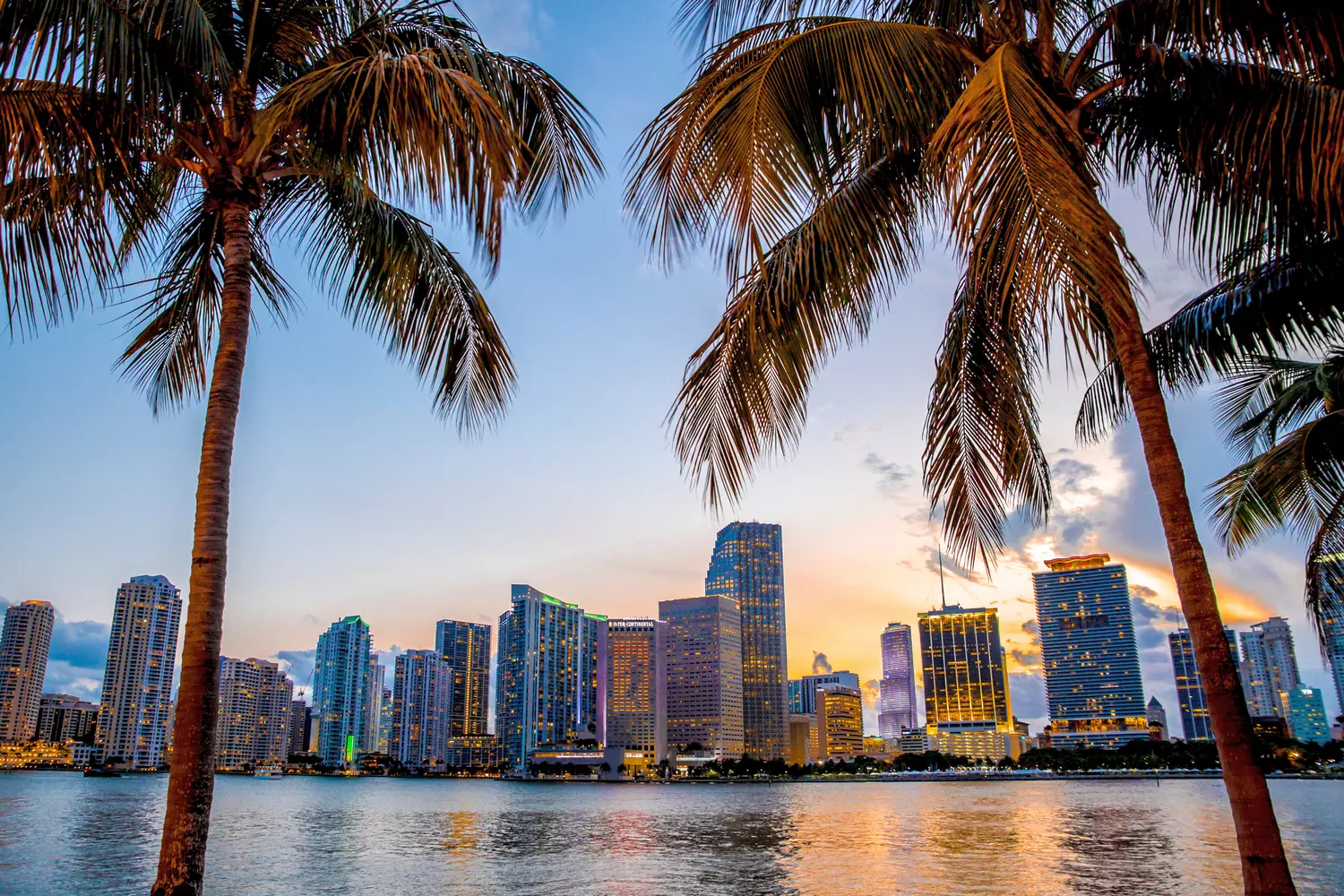
When a tourist visits Florida, they see bright sun, white beaches, and palm trees, and on souvenir postcards — colonial architecture, Spanish forts, and cozy resort towns. This is a visual, convenient narrative that sells the resort and the idea of a “beautiful history.”
But Osceola is not there. Not because he was forgotten or ignored. His story is simply inconvenient. It breaks the usual frames of tourist storytelling.
- 01. A history that doesn’t fit the mold
- It is not about U.S. victory — an army considered invincible endured defeats for seven years.
- It is not about progress — the Florida swamps show that nature can halt any development, not just civilization.
- It is not about neat colonization — this is a story of struggle, fear, pain, and moral defeat. For the tourist, it’s inconvenient truth: instead of picturesque scenes — there are swamps, thickets, a broken army, and a leader who cannot be “photographed.”
- 02. One man against an empire
Osceola shattered the illusion of the invincible U.S. Army. He did not hold forts or erect monuments. He knew the swamp trails better than any general, used them as weapons, and did what seemed impossible: the U.S. Army lost, even if formally there was no “defeat.”
This is what makes his story inconvenient for tourist marketing. Unlike resort panoramas, his feat is invisible on postcards but palpable if you walk through the swamps, trails, and battle sites — where history left its mark rather than a pretty facade. - 03. Florida in two layers
The modern tourist sees only the facade: bright sun, palms, orange groves, sandy beaches. A historian or researcher sees something else: swamps, bloody trails, resistance, and the symbol of human resilience.
Osceola remained where he belonged — in the Everglades, in Seminole history, and in the memory of those who study the truth. And that is why he cannot be “sold” on a postcard: the story is too sharp, too inconvenient, and too real.
Osceola is not in tourist brochures. You won’t see him on magnets or panoramic photos. But if you want to truly understand Florida — you need to go where the real history happened, walk the places where one man managed to bring the U.S. Army to its knees.
Step by Step in Osceola’s Footsteps: Where History Still Lives Today
If you want to see Florida not just through postcards and tourist brochures, there are places where the history of the Second Seminole War can be felt with every step. Here, there are no monuments to U.S. victories, no ceremonial halls — only nature, swamps, and traces of the past that remind you how one man and his people challenged an empire.
- 01. The Everglades — the swampy arena of war
These endless, reed-covered swamps were the Seminoles’ greatest ally. Walking along the trails and wooden boardwalks, you can feel that for the U.S. Army, there was no safe path here:
- Water and mud clogged their boots;
- Reeds hid ambushes;
- Mist and humidity turned every step into a challenge.
Tip for tourists: take a boat tour through the Everglades. Many guides explain Seminole ambush techniques, show old trails, and point out where camps and hidden routes were. This is a place where you can literally feel Osceola’s spirit.
- 02. Old military roads — routes of failed campaigns
Across the Everglades and Florida, traces of old U.S. Army roads still remain. They were narrow, poorly fortified, and often turned into traps for soldiers:
- People disappeared here;
- Ambushes took place here;
- You can feel how logistics and discipline were powerless.
Tip for tourists: walk along the roads leading to forts and former camps. Even a simple stroll allows you to sense the scale of the challenges the soldiers faced.
- 03. Abandoned forts — silent witnesses
Some forts, built in the mid-19th century to fight the Seminoles, are still partially preserved. They appear abandoned, sometimes surrounded by swamps or overgrowth. Visiting these fortifications gives a unique sense of:
- How limited the army’s capabilities were;
- How nature could “subdue” soldiers;
- How a small group of people could control the territory, knowing every bush and trail.
Tip for tourists: pay attention to Fort Foster and Fort King — historic sites where you can see remnants of fortifications and visit small museums with exhibits about the Seminoles and Osceola.
- 04. Places of memory and cultural sites
Although the history is inconvenient for tourist postcards, its memory lives on in:
- Parks and nature reserves that preserve the flora and landscape familiar to the Seminoles;
- Small museums dedicated to the Seminoles and 19th-century Florida history;
- Educational trails where guides explain Osceola’s tactics and the life of his people in the swamps.
Tip for tourists: be sure to visit the Seminole Tribe of Florida Museum and cultural centers, where they tell not only about the war but also about Seminole life before and after the conflicts.
The most important thing in these places is the sense that there were no victors. The swamps and trails preserve the memory that even the strongest army cannot always subdue nature and the people who know their land.
Walking through these sites becomes an immersion into history: you see how war shaped people, how the strategy and courage of a single individual — Osceola — changed the course of events, and how the land, water, and reeds became allies of the opponent.
American Butler — The Florida Tourists Never See
Osceola is not just a Native American chief or a figure from history textbooks. He is a symbol that:
- Strength does not always lie in numbers — even the largest army can be powerless against someone who knows their land;
- Systems are vulnerable — bureaucracy, logistics, and standard strategies can collapse where nature sets its own rules;
- True history is rarely convenient — it doesn’t fit on postcards, isn’t sold in souvenirs, and doesn’t belong in tourist brochures.
Florida as we usually see it — the ocean, palm trees, sunsets, and resorts — changes when you understand the land you are walking. The Everglades swamps, old military roads, abandoned forts, hidden trails — all of it preserves traces of real events. Here, you can feel the spirit of resistance, strategy, courage, and tragedy.
We offer a different approach:
- Individual routes tailored to your interest in history;
- Real locations where events of the Second Seminole War took place;
- Immersion in context to understand the significance of every swamp, fortification, and trail;
- No mass tourism — just you, your guide, and the history that cannot be seen otherwise.
You will walk in Osceola’s footsteps, hear the stories of the Seminoles, see how nature itself became part of history, and understand why this land left a lasting mark on America.
We design routes for those who want not just to see Florida, but to feel its past and grasp the real story. This is not a tour for photographs — it’s a journey into the past, where every step reveals meaning and events hidden from the mass gaze. With American Butler, you will discover:
- The Everglades — swamps where Osceola waged his war;
- Seminole lands — hidden trails and settlements;
- Abandoned forts — silent witnesses to the U.S. Army’s setbacks;
- Secret locations where history remains unsoftened by time.
Each route is unique and carefully crafted to provide a full immersion into the era, culture, and spirit of the place.
Share